Ready vs off-plan entry records: what the first payment event proves
 Lida Moghaddam
Disclaimer: This article is for general informational purposes only. It is based on cited public data and published under Lida Moghaddam's RERA-licensed masthead. It is not financial, legal, or investment advice. Dubai's property market moves quickly, so figures, yields, and rules may change or become outdated by the time you read this. Verify current information with the relevant authority or a qualified professional before acting. Read the full disclaimer.
Table of contents
Dubai Land Department gives a signed off-plan sale and purchase contract a 90-day window to reach the provisional register. That registry event is different from the first private payment event, just as a ready-property deposit instrument is different from the completed sale-registration output.
The first payment and first registry event are separate
The first cash event can create useful private evidence without creating the DLD output that belongs to registration. A signed agreement states what the parties accepted. A cheque copy, bank debit or receipt can show a payment instruction or movement. The registry output shows that the relevant DLD service reached its issued-document stage.
That distinction changes the question from “Has something been paid?” to “Which event does this document evidence?” It also prevents a reservation, deposit or payment receipt from being described as though it were a title deed or provisional registration certificate.
Sources: DLD Property Sale Registration, DLD initial-sale registration and the official Form F template, checked 1 October 2026.
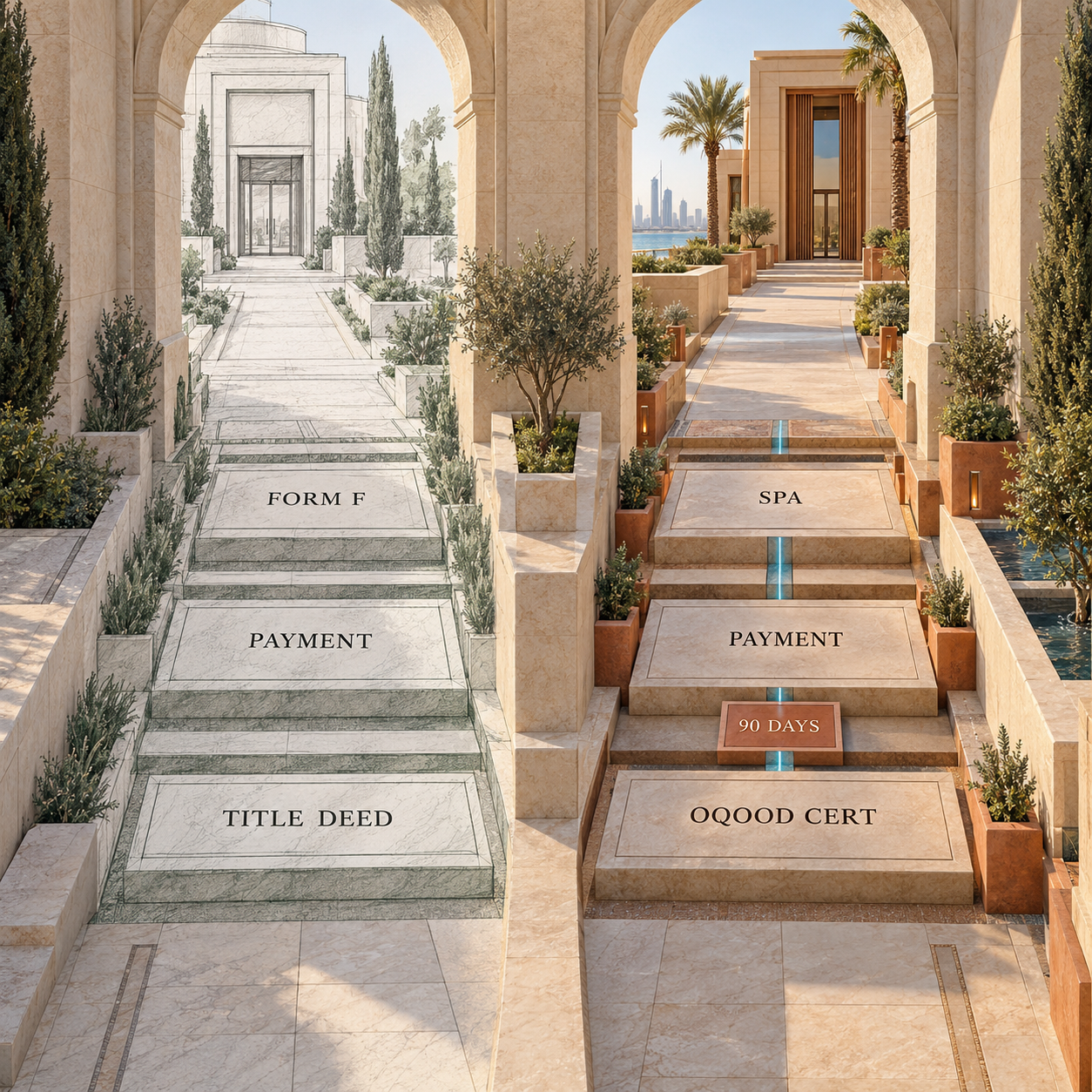
This is the central Invest lens. The route comparison is not about which document sounds more formal. It is about matching each document to the event that produced it. For the wider cash-staging view, see the off-plan versus ready cash requirement table.
The ready route starts with contract evidence, not a title deed
The official Form F template records a private agreement with transaction fields, while DLD’s separate sale-registration service names the electronic title deed as its output. The template includes the contract number, signature and expiry dates, property details, seller and buyer details, a deposit-cheque amount field and a balance-payment field.
Those payment values are blank in the published template. It therefore supports a narrow statement: the form anticipates that the parties will record the agreed amount and payment method. It does not support a universal deposit percentage for every ready purchase.
The Form F text also distinguishes the contract-stage payment entries from the later transfer. The ready-property registry page then describes a sale transaction between the contracting parties for land, property or a completed unit. It requires identity evidence, including a valid passport for a non-resident foreign buyer, and lists an electronic title deed among the issued documents.
Consider the file at two moments. At the contract stage, it may contain the signed Form F and evidence tied to the payment terms written into that contract. At the completed registration stage, it can contain the DLD-issued electronic title deed. The second document answers a registry question that the first set of records does not.
The off-plan route has a separate provisional-register output
The off-plan registry boundary is visible because DLD names both the input and the output. Its initial-sale service covers units sold off-plan, or plots whose value has not been fully paid, at the provisional register. Oqood is the DLD service channel named for that provisional sale registration.
The developer logs into Oqood, selects the provisional sale registration service, enters the property details, attaches the documents and submits the application. For an individual purchaser, DLD lists a copy of the sale and purchase contract and identity documents among the required material. The page states that the contract must be signed by the developer and purchaser.
The issued document is a provisional registration e-certificate, sent to the purchaser by email according to the published procedure. That makes the evidence progression specific:
- The signed sale and purchase agreement records the developer-purchaser contract.
- A receipt or banking record can evidence the payment event it identifies.
- The provisional registration e-certificate evidences the output of the Oqood registration service.
The DLD page does not state a universal first-payment percentage, booking deadline or payment-plan sequence. Those items must come from the actual project documents if they are relevant to the investor’s file. The off-plan reservation-form evidence guide examines that earlier private-record layer separately.
The official fees and clocks sit at the registry event
The two current DLD pages publish the same headline percentage split, but they attach different additional fees, service times and outputs to the respective registration services. These are registry-event figures, not evidence of what a private first deposit must be.
Sources: DLD ready sale registration and DLD initial-sale registration, checked 1 October 2026.
The table should not be read as a full cash requirement for either route. The ready page lists other map and service-partner fees, while a specific off-plan contract may contain its own payment schedule. The comparison here stays at the official registration boundary so a private payment and a registry charge do not get combined into one event.
Audit the file by party, event and output
The most useful evidence review asks three questions in order: who produced the record, which event it records and what output the relevant system issued. That framework works across both routes without turning the article into a recommendation.
Name the party
Identify whether the record came from the buyer, seller, developer, broker, bank or DLD. A document’s issuer limits what it can establish.
Name the event
Write the event beside the record: contract signing, payment instruction, cleared payment, provisional registration or completed sale registration. Similar dates do not make the events interchangeable.
Name the output
For the ready route, match the completed sale-registration event to the electronic title deed. For off-plan, match the Oqood initial-sale event to the provisional registration e-certificate.
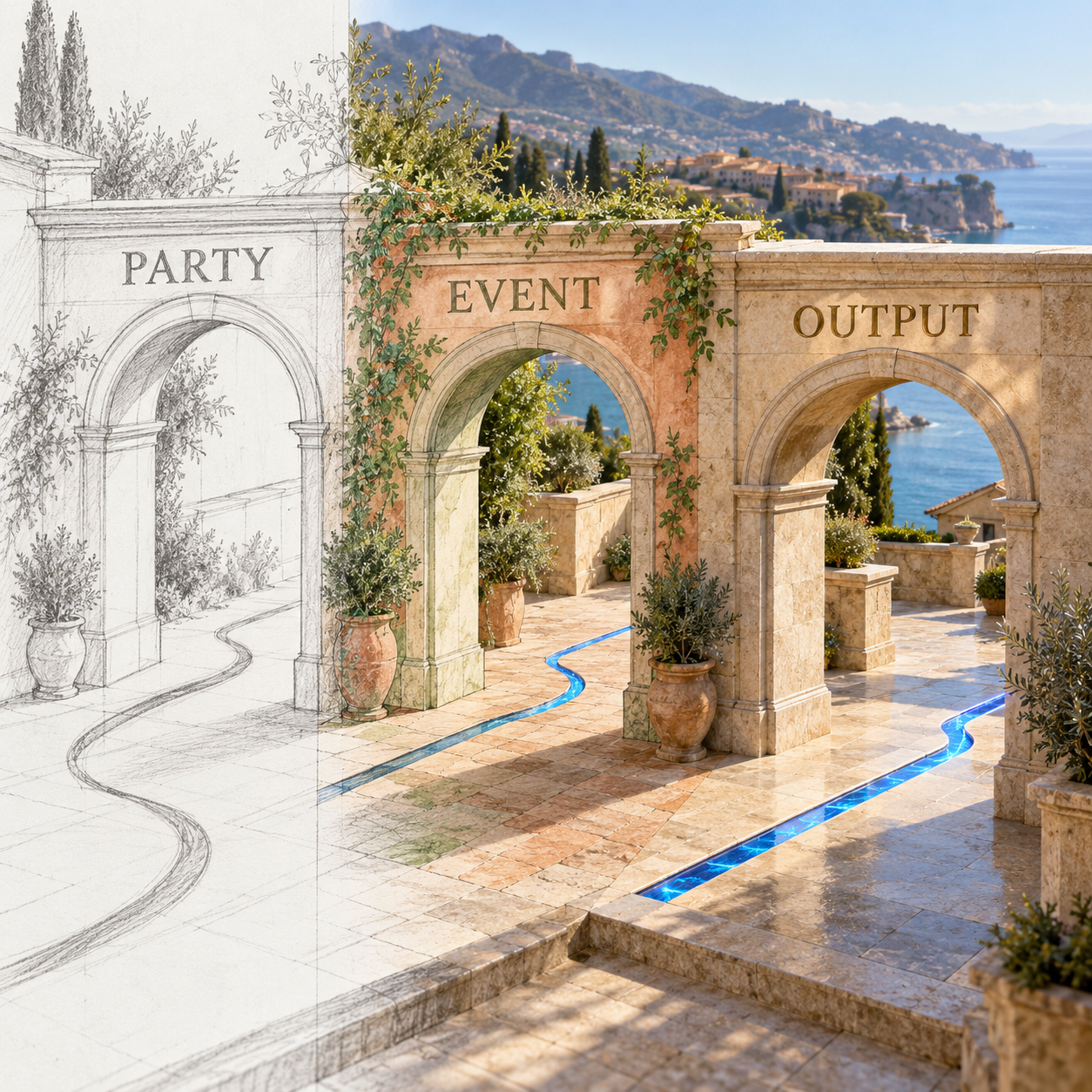
For an investor comparing entry mechanics, this is the best-fit verdict: use the first payment record to understand the private cash event, and use the named DLD output to understand the registry event. If either record is missing, the gap should be described by its scope, not filled with an assumption about a standard sequence.
Sources checked on 1 October 2026
- Dubai Land Department: Property Sale Registration
- Dubai Land Department: Request to register the initial sale
- Dubai Land Department: Property Sales Contract between Seller and Buyer, Form F
FAQ checked on 1 October 2026
Is it better to buy off-plan in Dubai?
The official pages used here do not compare investment performance. They show different record boundaries: the off-plan route has a provisional registration e-certificate, while completed ready-property sale registration issues an electronic title deed. The closer match depends on which registry stage the investor needs to evidence.
What is off-plan property in the UAE?
For this Dubai evidence comparison, DLD’s initial-sale service covers units sold off-plan, or plots whose value has not been fully paid, at the provisional register. The service runs through Oqood and issues a provisional registration e-certificate.
What is the 4% DLD fee?
As of 1 October 2026, both DLD service pages used here publish a seller share of 2% and a buyer or purchaser share of 2% of sale value. Each page also lists additional fees, so the percentage sum is not the whole transaction cash requirement.
Lida MoghaddamArchitect-turned-real-estate-specialist based in Dubai. She helps buyers, sellers, and investors read property with a designer's eye — structure, location, and long-term value.