Dubai developer completion cohorts by community type: a six-record method (2026)
Six current DLD project records checked on 29 September 2026 returned Finished at 100.0% and, after an official-source mapping, form three completion-year cohorts across two withlida community types. That result describes the selected records only; it is not a building, unit, handover, timeliness or performance count.
The population comes before the cohort
The population is six exact DLD project records, not every project connected to a developer name. It is a bounded worked sample selected only after each record could be tied to one of two current, source-defined community types.
The DLD Project Status Enquiry says it returns project completion percentage and details in Dubai. As accessed on 29 September 2026, its website procedure accepts a land number, project number or project name, and DLD describes the service time as immediate. The live interface also exposes a search by project name or project number.
The inclusion rule had three parts:
- Preserve the exact project number and registered developer from the returned DLD row.
- Require the returned status
Finishedand a populated DLD completion-date field. - Map the project to a community type only when current official issuer material supports the relationship. A shared word in a search result is not enough.
That third rule matters. The submitted Sidra search also returned records in Business Bay under different registered entities. Those rows stayed outside the population. Another returned record stayed out because a current issuer page binding that exact row to the proposed community label was not retained. Searches that returned no exact record also remain exclusions, not blank observations.
Every returned row, empty search, mapping and exclusion is preserved in the audit. The wider completion-record table method explains why the project number and legal developer belong in separate columns before any comparison begins.
Community type is an editorial field
The two community types are withlida classifications based on the issuer's current property-type descriptions. They are not DLD statuses, and they do not change any returned registry field.
Sources: Emaar's current community directory labels Dubai Hills Estate as apartments, villas and townhouses. The Arabian Ranches III community page lists Joy and Sun within that community and identifies its property types as villas and townhouses. Both pages were accessed on 29 September 2026.
The taxonomy is deliberately small and mutually exclusive for this sample. It does not mix ownership tenure, construction stage, price segment and home format into one column. Those dimensions answer different questions and would need separate fields.
The mapping also stays outside the DLD response. The record table keeps returned DLD fields, editorial mapping fields and calculated cohorts separate. In the ledger below, community type is editorial, Finished is returned status, 100.0% is returned completion ratio, and the year cohort is calculated from the returned completion date.
The six-record classification ledger
The ledger preserves identity before it aggregates anything. It contains six DLD project numbers, two registered legal developers and six separate completion dates from 26 June 2019 to 16 December 2022.
Source: exact current records from the DLD Project Status Enquiry, fetched on 29 September 2026. The Joy and Sun issuer pages independently bind those project names to Arabian Ranches III. The Dubai Hills rows returned Dubai Hills Estate L.L.C as the registered developer; the community type comes from the separate issuer directory cited above.
Registration date and completion date remain separate because DLD returned them as separate fields. The ledger does not infer why the dates differ, and it does not replace either date with an issuer's stated target.
The related Emaar community completion record applies the same identity discipline at a broader community level. This ledger narrows the question to a source-backed type classification.
Code produces three completion-year cohorts
The calculation groups the six exact records first by editorial community type, then by the year in the returned DLD completion-date field. It produces three year cohorts without changing the source records.
Method: code reads the six saved DLD detail responses, validates each project number, status, completion ratio and date, applies the saved editorial mapping, and counts the year values. The totals reconcile to six records and two community types as of 29 September 2026.
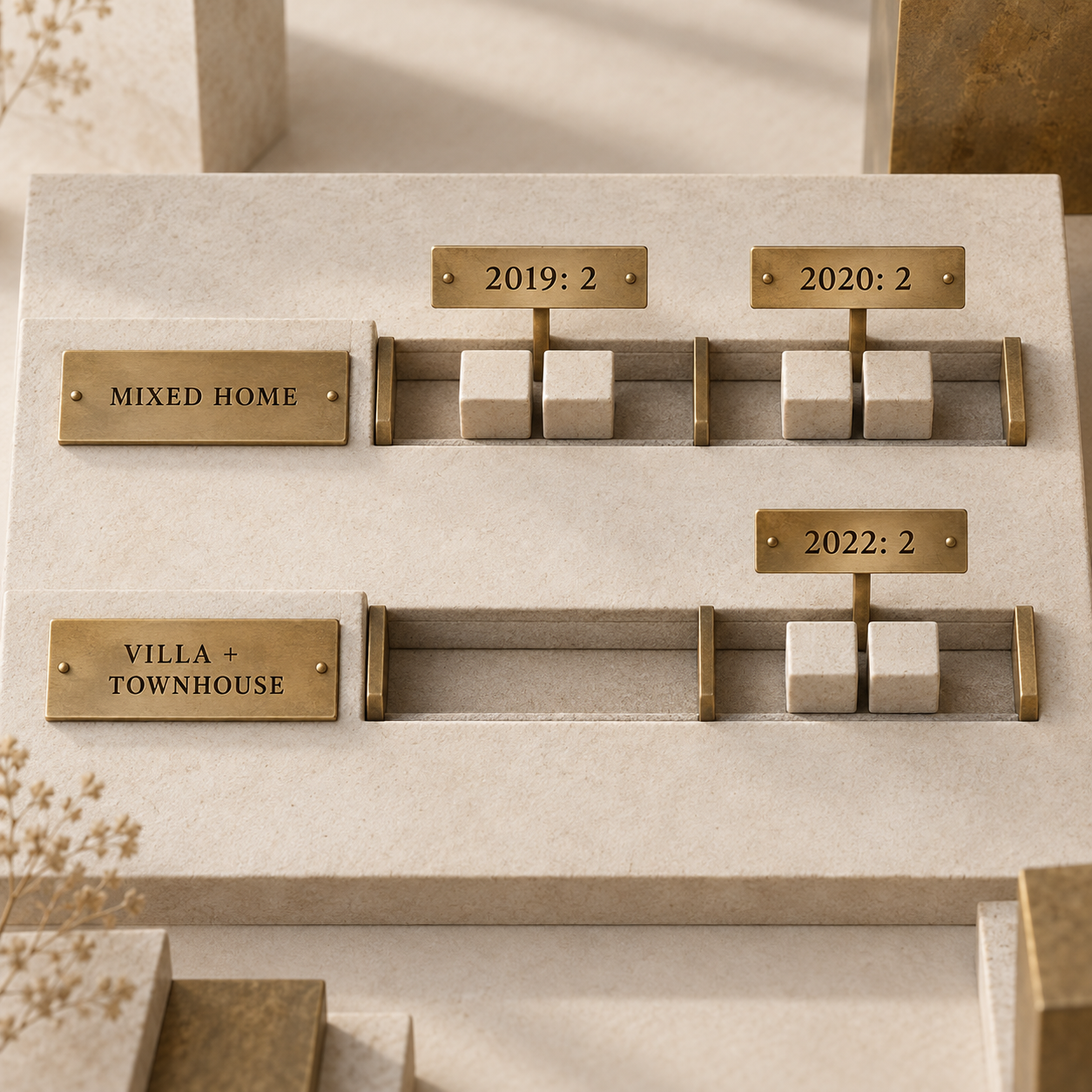
The table does not show that one community type performs better. Its uneven row count comes from the sample design: four selected records in one mapped type and two in the other. Expanding the population would require a new declared inclusion rule and a fresh source audit, not an extrapolation from these six rows.
What the result can show and cannot show
The result can show record identity, returned status fields, completion-date cohorts and the size of this selected population. It cannot turn those fields into a judgment about a developer or a claim about events the records do not expose.
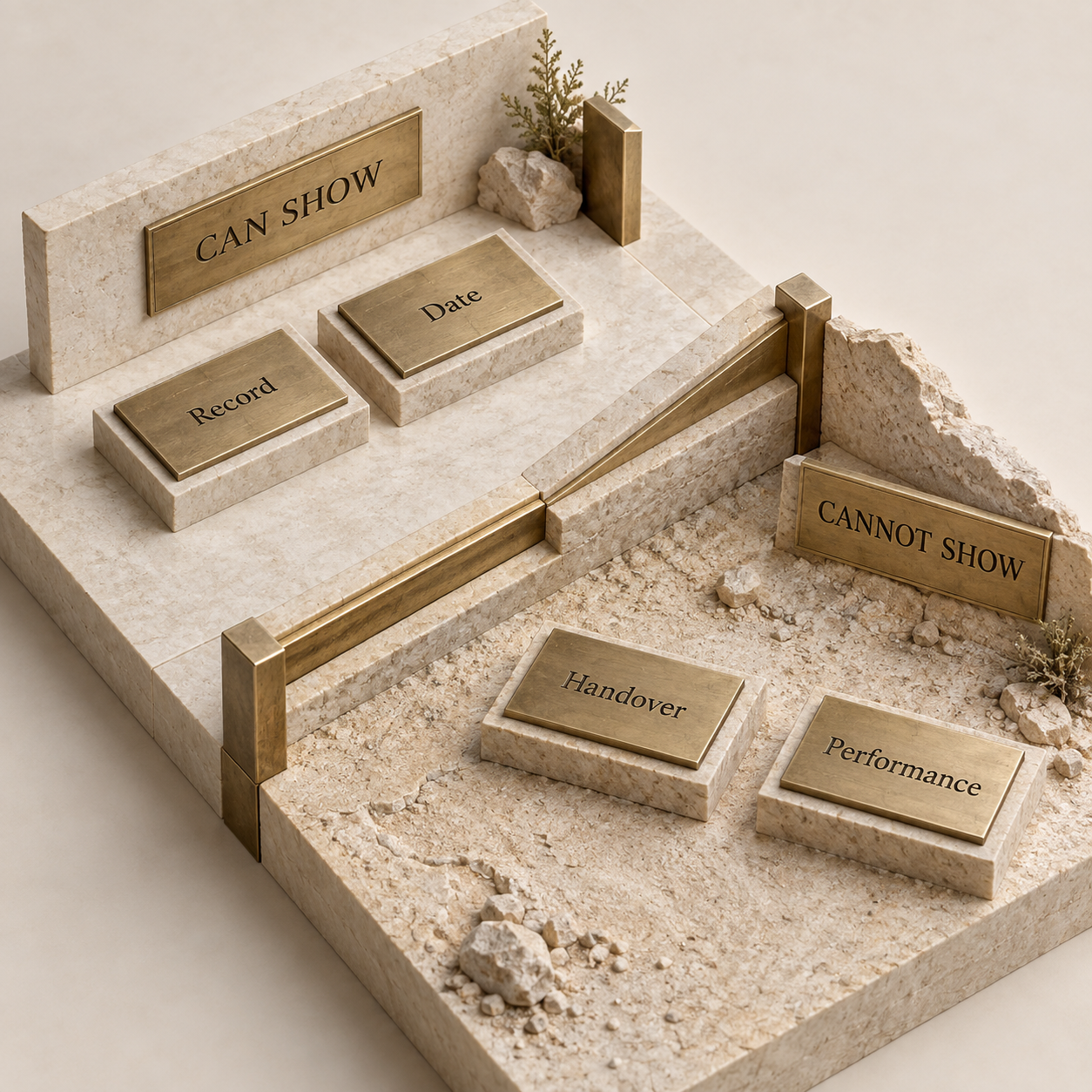
The boundary is the conclusion, not a caveat after the result. A DLD project record is the unit counted here. A building count would require building-level fields and rules. A unit count would require unit-level evidence. A handover count would require a source that records handover at that level. None can be substituted for another.
A repeatable record method
The method works only when every transformation remains visible.
Declare the population
List the exact project numbers, search date, inclusion rule and exclusion rule before calculating a cohort.
Keep returned fields intact
Store the DLD project name, registered legal developer, status, completion ratio, completion date and registration date under their source labels.
Map community type from a separate source
Use a current official community or project page. Record the source and label the result as an editorial classification. Do not assign the type from a shared project-name word.
Calculate from saved records
Group exact records by the editorial type and the year in the returned completion-date field. Publish the project-record count beside each cohort.
State the evidence boundary
Name the conclusions the fields support and the conclusions that need different evidence. Do not convert a registry field into a handover or performance claim.
This structure leaves room for a larger future sample without changing the nouns. New records can be added, mappings can be revised when official pages change, and the same code can rebuild the table from the retained source fields.
FAQ, checked 29 September 2026
Who is the biggest Dubai developer?
“Biggest” needs a named metric and period. A count of selected DLD project records is not the same as buildings, units, handovers, sales or corporate assets, so this six-record method does not assign that label.
What are the top Dubai developers?
A neutral record method does not create a league table. It compares exact, source-defined fields and states what each cohort can establish without ranking quality or performance.
Does DLD Finished mean every unit was handed over?
The selected DLD records returned separate status, completion-ratio and completion-date fields on 29 September 2026. This population contains no unit-level handover field, so it does not establish that conclusion.
Can project counts measure developer performance?
No. A project-record count describes the selected registry rows. Buildings, units, timeliness, quality and handover require their own sources, definitions and observation periods.