How to compare Dubai developers using a completion-record table
DXBinteract's DLD-derived inventory lists 137 delivered Emaar projects and 91 delivered DAMAC projects since 2012, as retrieved on 18 September 2026, but those totals are only the first column of a fair comparison. Build the table project by project: record the DLD status, preserve the developer's own completion claim as a separate field, then add resale transactions for the same building type and time window.
Start with three evidence layers, not one score
A useful table shows what each source can prove, and leaves the rest visible as missing. The worked example below uses the same DXBinteract inventory scope, since 2012, for all four developers. Its official-page column is deliberately separate because each company publishes its portfolio in a different format.
Sources and periods: each developer name links to its exact DXBinteract inventory page, retrieved 18 September 2026, whose inventory scope begins in 2012. The developer-published entries come from Ellington's virtual-tour page and Emaar's recently completed page, both checked on the same date.
What the DLD project-status record proves
The DLD record is the first project-level check because it reports the registered project's status and completion percentage. As of 18 September 2026, the DLD Project Status Enquiry accepts three identifiers: land number, project number, or project name. DLD states that the result is immediate and that the service is available through its website, the Dubai REST app and WhatsApp.
Fix the project identity
Copy the project name and number from the sales documents or developer page. Keep the master community and the individual building separate, because one community can contain projects with different records.
Capture the DLD snapshot
Record the project status, completion percentage and the date you checked it. If the result shows an inspection or completion date, copy it exactly. Do not convert a current completion percentage into an expected handover date.
Repeat for every shortlisted project
Use one line per project, then group the lines by developer. A developer-level row should be a transparent roll-up of the project rows, not a label assigned from memory.
The DLD open-data page also names fields such as developer name, project status, completed percentage, inspection date and completion date. Its public form was captcha-gated in this run, so no unseen row has been copied into the worked table.
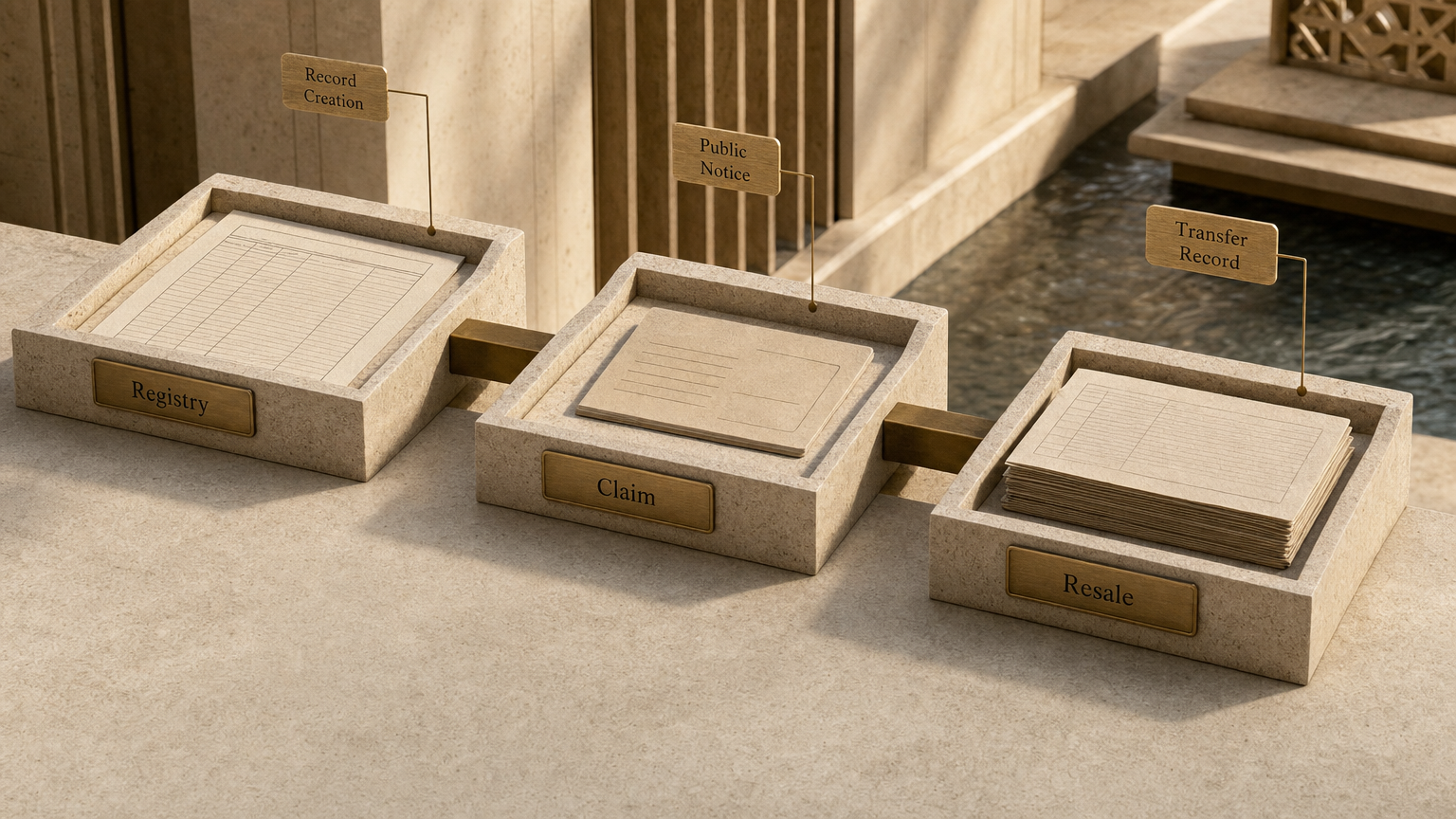
What a developer completion page proves
A developer page proves what the developer publishes about its own portfolio, not what the registry records across every project. That still makes it useful: it supplies exact project names, handover announcements, community labels and links that can be checked against DLD.
Emaar's page, checked 18 September 2026, names Address Villas Hillcrest, Vida Residences Dubai Mall, Creek Crescent and Seagate as recently completed projects. Ellington's virtual-tour page marks Palm Villa Collection, Belgravia III, Wilton Terraces and Wilton Terraces II as handed over. Those are usable project leads, but neither public extract supplies an all-portfolio total.
Preserve the wording in a developer claim column. Add a separate DLD status column beside it. If the two sources use different project names, store both names and the project number rather than deciding that they refer to the same registration.
Readers who want the company-specific context can continue to the Emaar completed-record profile or the Sobha Realty completed-record profile. Those pages are profile routes, while this page supplies the reusable method.
Add resale evidence at building level
Resale evidence becomes comparable only after the developer's original sales are removed and the building, asset type and period are fixed. DXBinteract defines resale as secondary sales, excluding off-plan and first sales from the developer. Its Business Bay page uses registered transactions and publishes both the deal count and the median, which is more informative than either number alone.
Here is a current building-level sample from the same page and the same trailing window. It is not a developer ranking.
The DXBinteract Business Bay analysis reports 3,430 registered apartment resales at a median AED 2,010 per sqft for the 12 months to 21 August 2026. Its building table includes only buildings with at least 10 resales. These numbers describe registered activity in that window. They do not isolate layout, floor, view, condition or service charge, and the area median must not be assigned to a developer.
For a like-for-like comparison, add these columns to the worksheet: building, bedroom type, internal area band, transaction window, resale count, median sale price, median price per sqft and source date. Where the dataset does not expose one field, keep the cell as "not exposed in the cited page".
Match the periods before comparing rows
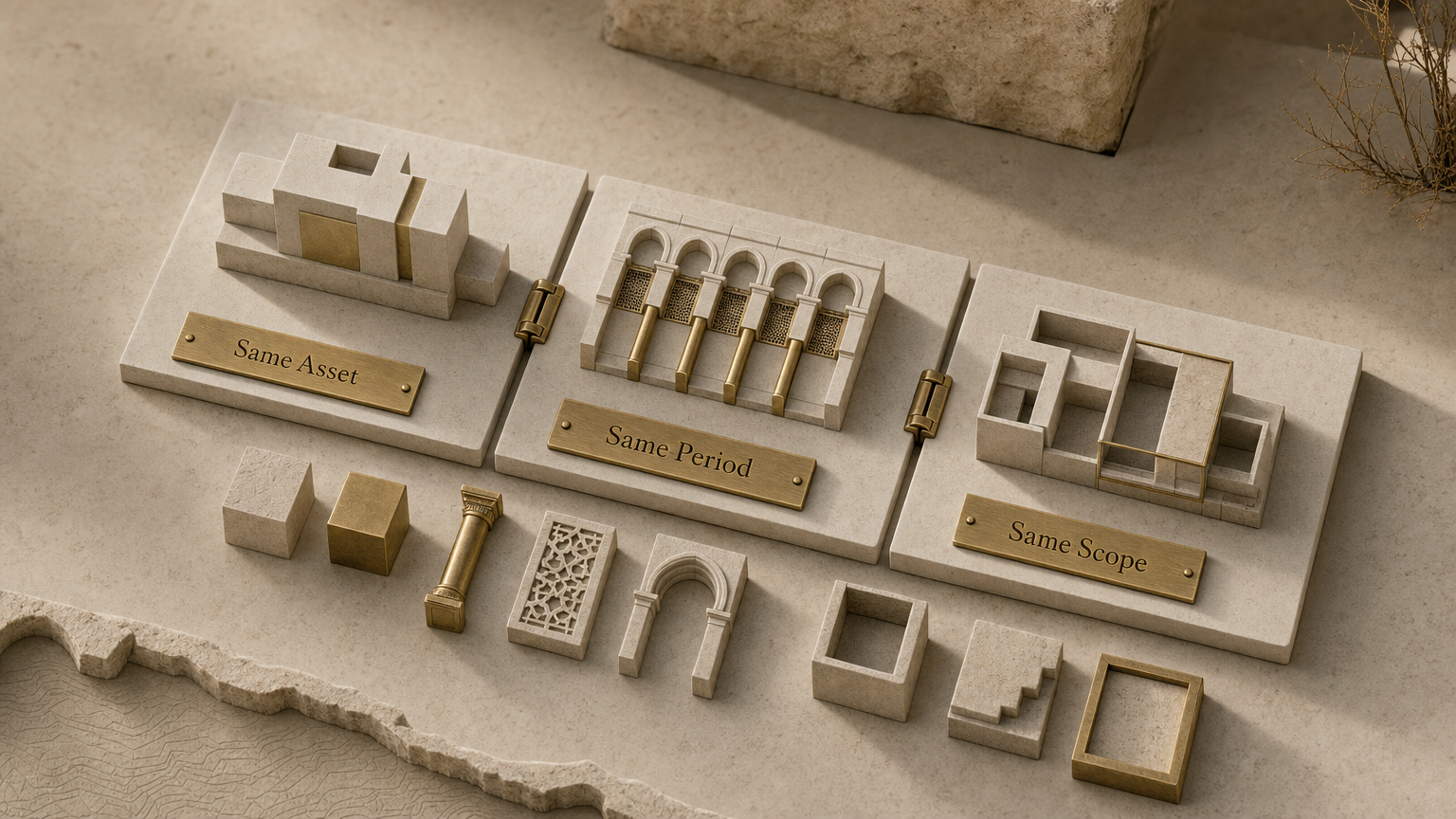
Period matching prevents a neat table from making a false comparison. A since-2012 delivered inventory, a DLD status checked today and a trailing-12-month resale median are three different clocks. Keep each clock in its own column.
Use these rules:
- Compare completion inventory only when the start date and definition of delivered are the same.
- Compare resale medians only for the same asset type and the same start and end dates.
- Put transaction count beside every median. A median based on 17 registered resales carries a different evidence depth from one based on 47.
- Do not calculate an on-time rate unless the cited records expose both the registered target date and the actual completion date for every project in the denominator.
- Stamp the table with the retrieval date. Dubai's registry and transaction datasets continue to update.
Route by buyer profile, not a league table
The table is most useful when its columns change weight with the buyer's actual question. The result is a best-fit route, not a universal winner.
- An off-plan buyer starts with the individual project's DLD status and registered identity, then uses the developer page to confirm the marketed name and published handover information.
- A ready-home buyer gives more weight to the building completion record and matched registered resales, because the relevant evidence already exists at building level.
- A buyer seeking broad community choice can use delivered-project and delivered-unit inventory as a measure of portfolio breadth, then narrow to the communities and property types that fit the household.
- A buyer focused on a specific design or product type compares projects within that segment. A smaller specialist portfolio and a large master-community portfolio answer different needs.
For a direct named comparison, the Emaar and DAMAC profile-by-profile guide applies this positive-routing approach to two portfolios. The method remains the same: project first, period matched, source labels intact.
A reusable completion-record template
The finished worksheet can stay compact. Use one row per project beneath each developer, then add a developer summary only for fields that share a definition.
This structure makes the limits visible. It also makes the next research step obvious: fill a project-level blank from an official record, or leave it open.
FAQ, checked 18 September 2026
Who are the biggest developers in Dubai?
"Biggest" needs a metric. Delivered projects, delivered units, current sales and land bank measure different things, so name the metric and period before comparing developers. The worked table above uses DXBinteract delivered inventory since 2012.
Which builder is good in Dubai?
Replace the adjective with a project fit. Check the named project's DLD status, the developer's published completion evidence, matched registered resales and whether that product suits the buyer's preferred area, asset type and time horizon.
Who are all the major developers in Dubai?
The official DLD licensed-developer lookup is the registration starting point. Apply the same completion-record table only to the companies and projects relevant to the selected area and property type.
Can one completion percentage compare two developers?
No single percentage does that work unless both developers are measured across the same registered project set, definition and date. Keep project snapshots as project evidence, then compare only fields with matching scope.