
Buying Dubai property by power of attorney: the overseas buyer file (2026)
 Lida Moghaddam
Disclaimer: This article is for general informational purposes only. It is based on cited public data and published under Lida Moghaddam's RERA-licensed masthead. It is not financial, legal, or investment advice. Dubai's property market moves quickly, so figures, yields, and rules may change or become outdated by the time you read this. Verify current information with the relevant authority or a qualified professional before acting. Read the full disclaimer.
Table of contents
Dubai Land Department states that a power of attorney used to purchase property is valid for five years from notarisation, as of 27 September 2026. That period does not make a document transfer-ready by itself: the wording must cover the buyer's intended acts, the signature and attestation route must fit where it was issued, and the DLD transfer file is still audited.
The buyer POA has five separate document stages
The cleanest way to prepare an overseas-buyer POA is to treat it as one branch of the purchase file, not as a substitute for that file. Each stage proves something different, and none proves all the others.
This is a document map, not a universal attestation sequence. MOFA describes attestation as authentication of signatures and seals. DLD's registration route separately tests whether the representative and the purchase file support the transfer presented.

Write the authority around the acts in this purchase
The POA should name the acts the representative is actually expected to perform. DLD's current FAQ says the proxy may transact within the limits of the powers granted, while the Property Sale Registration page permits a buyer or seller to act through a legally authorised representative (DLD FAQ and sale-registration service, checked 27 September 2026).
Use a scope matrix before drafting or approving the instrument:
The matrix is not model drafting language. A legal drafter or competent notary needs the actual transaction instructions, buyer identity and intended acts. If the representative will only attend transfer, the file should not silently assume authority to negotiate, borrow, receive money or appoint another person.
The wider Dubai purchase-path pillar covers the steps before and after this authority branch.
Choose the signature and notarisation route first
The signing route begins with where the buyer is, what identity document they hold, and where the POA will be issued. Those facts decide which official channel can process the document.
Fix the intended acts
List the acts expected from the representative and the authority before which each act occurs. Have the instrument prepared for those acts rather than starting with a generic template.
Identify the execution route
For Dubai Courts' current online POA-ratification service, the parties must hold valid Emirates IDs. A passport-only party without an Emirates ID must appear in person before the notary public (Dubai Courts, accessed 27 September 2026). An overseas buyer using a foreign-issued document follows the competent route in the place of issue before the UAE attestation steps that apply to that document.
Prepare the identity and supporting record
Dubai Courts lists identity proof for the principal and attorney, proof of the conferred powers where relevant, and a title deed where a POA relates to property. A buyer who does not yet own the target property should ask the notary what transaction record or property description is required for the proposed purchase rather than inventing a title record.
Read the route-specific fee
Dubai Courts publishes AED 100 for each party to its POA-ratification service plus AED 20 knowledge and innovation fee, as of 27 September 2026. Those amounts describe that Dubai Courts service only. They do not include foreign authority, mission, MOFA, courier, translation or professional charges (Dubai Courts).
No single signing route fits every overseas buyer. The buyer's country, document form and available UAE mission channel must be checked before the appointment and before fees are paid.
Foreign attestation and Arabic translation are separate
Foreign-document attestation authenticates the official chain around the document. It does not widen the POA's wording or confirm that DLD will accept it for a particular transfer.
MOFA's current service says the appropriate path is determined by the issuing authority and document type. For a document issued outside the UAE, the applicant selects attestation through UAE Missions Abroad and checks the relevant mission's site to see whether electronic submission is available. Where it is unavailable, the applicant visits the mission (MOFA, accessed 27 September 2026).
Dubai Courts' POA-ratification page states that a foreign-issued document presented through its service must be attested by the foreign ministry in the issuing country, the UAE embassy there and UAE MOFA. That page also says a non-Arabic document requires a legal translation certified by the UAE Ministry of Justice (Dubai Courts, accessed 27 September 2026).
These statements should be read together. Dubai Courts publishes the evidence it expects for its service, while MOFA routes the applicant according to the document and country. The buyer should retain the attested source document and its accepted Arabic translation as one connected evidence branch. A translation does not replace the source, and an attestation does not repair unclear scope.
Build the purchase file in three layers
The useful checklist separates what DLD publishes as the individual sale-registration core from the POA evidence and the records created by the actual transaction.
For an ordinary individual sale, DLD's public page lists the seller's and buyer's Emirates IDs for verification, or a valid passport for a non-resident foreigner, plus a developer e-NOC in freehold areas through Dubai REST (DLD, accessed 27 September 2026). An e-NOC is the developer's electronic statement that it has no objection to the transfer.
The page is a public service minimum, not a complete forecast for every represented purchase. Mortgage records, corporate records, payment instructions, signed transaction documents and property-status evidence belong in the file only where the actual route creates or requires them. The trustee-office transfer-day guide explains that separate completion branch.
Checklist for the buyer's authority file:
- Official core: valid buyer identity evidence and the e-NOC where DLD's ordinary freehold route requires it.
- POA text: principal, attorney, intended acts, relevant authorities, property or transaction description, limits, end wording and substitution position.
- Execution evidence: the notarised or ratified instrument and the identity evidence used in that route.
- Foreign branch, if applicable: the country-specific official attestations and MOFA completion required for that document.
- Language branch, if applicable: the accepted Arabic translation linked to the attested source.
- Transaction-specific: only the mortgage, company, contract, payment or other records required by the actual transfer.
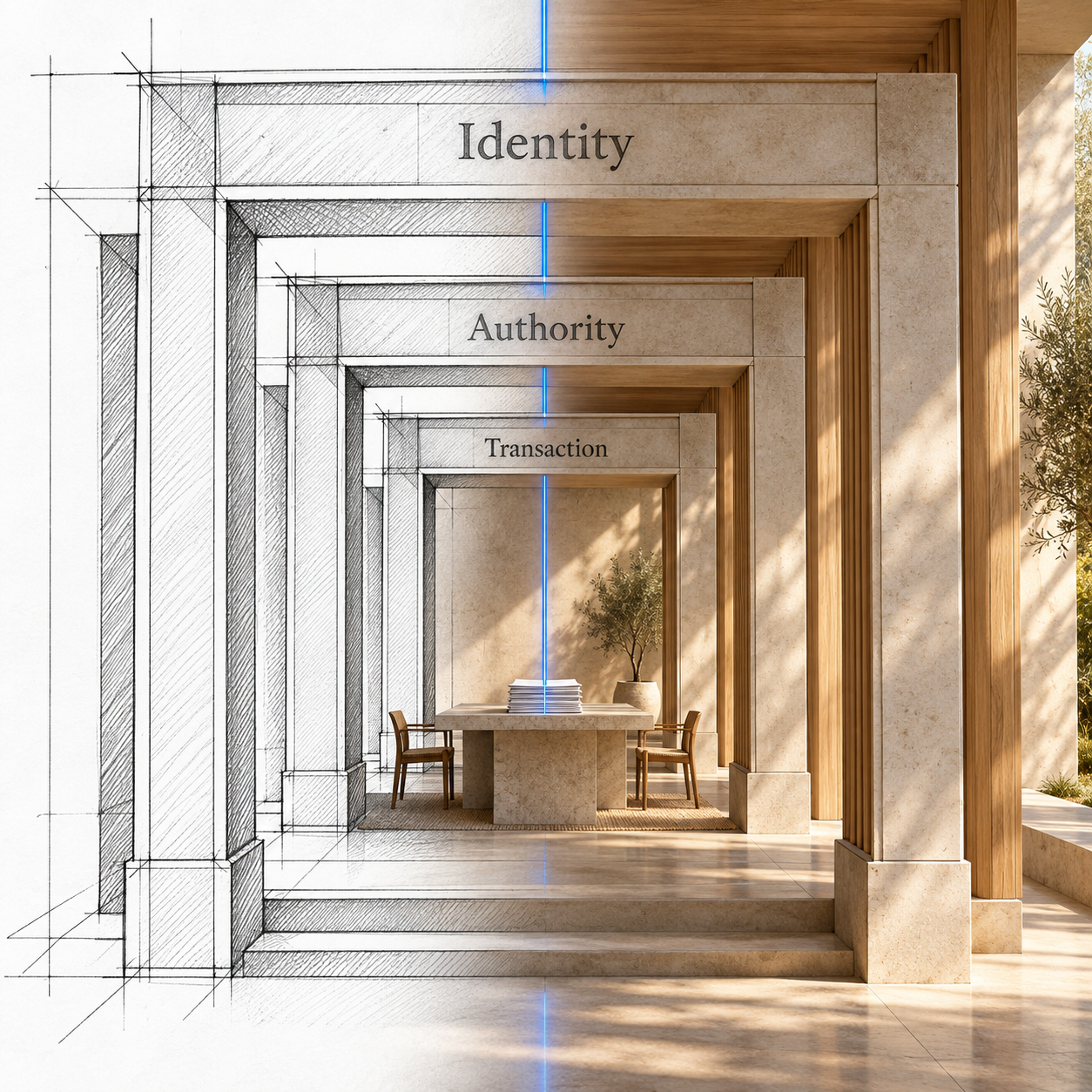
Transfer acceptance happens in the DLD registration route
The transfer appointment is where the prepared authority meets the live property record. DLD says the trustee employee verifies the required documents, identifies deficiencies, uploads the required records to the digital vault, enters the transaction data and performs an audit (DLD, accessed 27 September 2026).
That process is why a notary, embassy, translator, agent or conveyancer cannot make an acceptance promise on DLD's behalf. Each can complete or review a part of the evidence chain. The transfer authority still reads the representative's power against the transaction being registered.
Before the booked appointment, send one document-specific pre-check to the relevant trustee or professional handling the file. State the issuing country, language, principal and attorney identities, property reference, intended acts, document format, attestation status and whether substitution is contemplated. Ask which originals or digitally verifiable records must be presented and whether any wording or evidence remains unresolved.
The official output of the ordinary sale-registration route is an electronic title deed, electronic map and fee balances. Those are registration outputs, not evidence that the buyer's POA was sufficient before the audit.
The five-year period is a limit, not an acceptance certificate
DLD's current FAQ distinguishes a purchase POA from other transaction purposes. It states five years from notarisation for purchase, and two years for purposes including sale, mortgage and grants (DLD FAQ, accessed 27 September 2026).
A buyer's file can therefore be within the stated period and still need correction. Dates do not answer whether the named attorney may sign a particular document, handle a payment instrument, substitute another person or represent the buyer before the authority shown in the booking.
Official sources
- Dubai Land Department, Property Sale Registration, accessed 27 September 2026.
- Dubai Land Department, Frequently Asked Questions, accessed 27 September 2026.
- Dubai Courts, Power of Attorneys Ratification, accessed 27 September 2026.
- UAE Ministry of Foreign Affairs, Documents Attestation, accessed 27 September 2026.
Can a foreigner buy property in Dubai through a representative?
DLD marks Property Sale Registration as available to all residency statuses, accepts a valid passport for a non-resident foreign buyer and permits legally authorised representatives. The authority evidence and the property's registration route still need to support the specific transfer (DLD, accessed 27 September 2026).
How long is a buyer power of attorney valid for a Dubai purchase?
DLD's current FAQ states five years from notarisation at the notary public for purchase. Verify the instrument's scope, current status and file acceptance as well as its date (DLD FAQ, accessed 27 September 2026).
Does a foreign buyer's POA need Arabic translation?
Dubai Courts says a document not in Arabic requires a legal translation certified by the UAE Ministry of Justice for its POA-ratification route. Keep the translation connected to the attested source document (Dubai Courts, accessed 27 September 2026).
Does notarisation mean DLD must accept the POA at transfer?
No. Notarisation or ratification addresses the formal instrument and signature route. DLD's trustee employee still verifies the submitted transfer file, identifies deficiencies and performs the transaction audit (DLD, accessed 27 September 2026).
What should a Dubai property purchase POA cover?
It should be prepared around the intended acts, the named representative and the authorities involved. DLD says the proxy acts within the limits stated in the POA, so authority to sign, submit, receive, handle funds or appoint another person should not be inferred from the document's title (DLD FAQ, accessed 27 September 2026).
Lida MoghaddamArchitect-turned-real-estate-specialist based in Dubai. She helps buyers, sellers, and investors read property with a designer's eye — structure, location, and long-term value.