
Vacant versus tenanted Dubai sale: the document file for each route
 Lida Moghaddam
Disclaimer: This article is for general informational purposes only. It is based on cited public data and published under Lida Moghaddam's RERA-licensed masthead. It is not financial, legal, or investment advice. Dubai's property market moves quickly, so figures, yields, and rules may change or become outdated by the time you read this. Verify current information with the relevant authority or a qualified professional before acting. Read the full disclaimer.
Table of contents
As of 18 September 2026, DLD lists 25 minutes for a ready-property sale-registration appointment once the required file is complete. The vacant and tenanted routes share the seller and buyer identity documents and the developer e-NOC; the tenanted route adds the live lease record, rent and deposit reconciliation, and a clear post-transfer handover to the new landlord.
The five-stage file at a glance
The transfer-day checklist is mostly shared; the real difference is the evidence that describes possession before Form F and preserves a live tenancy after title changes.
The issuer column matters. DLD publishes the transfer requirements. RERA's smart contracts record the marketing and sale agreements. The developer issues the e-NOC. Ejari holds the registered tenancy record. One party's preferred checklist should not be presented as a universal DLD rule.
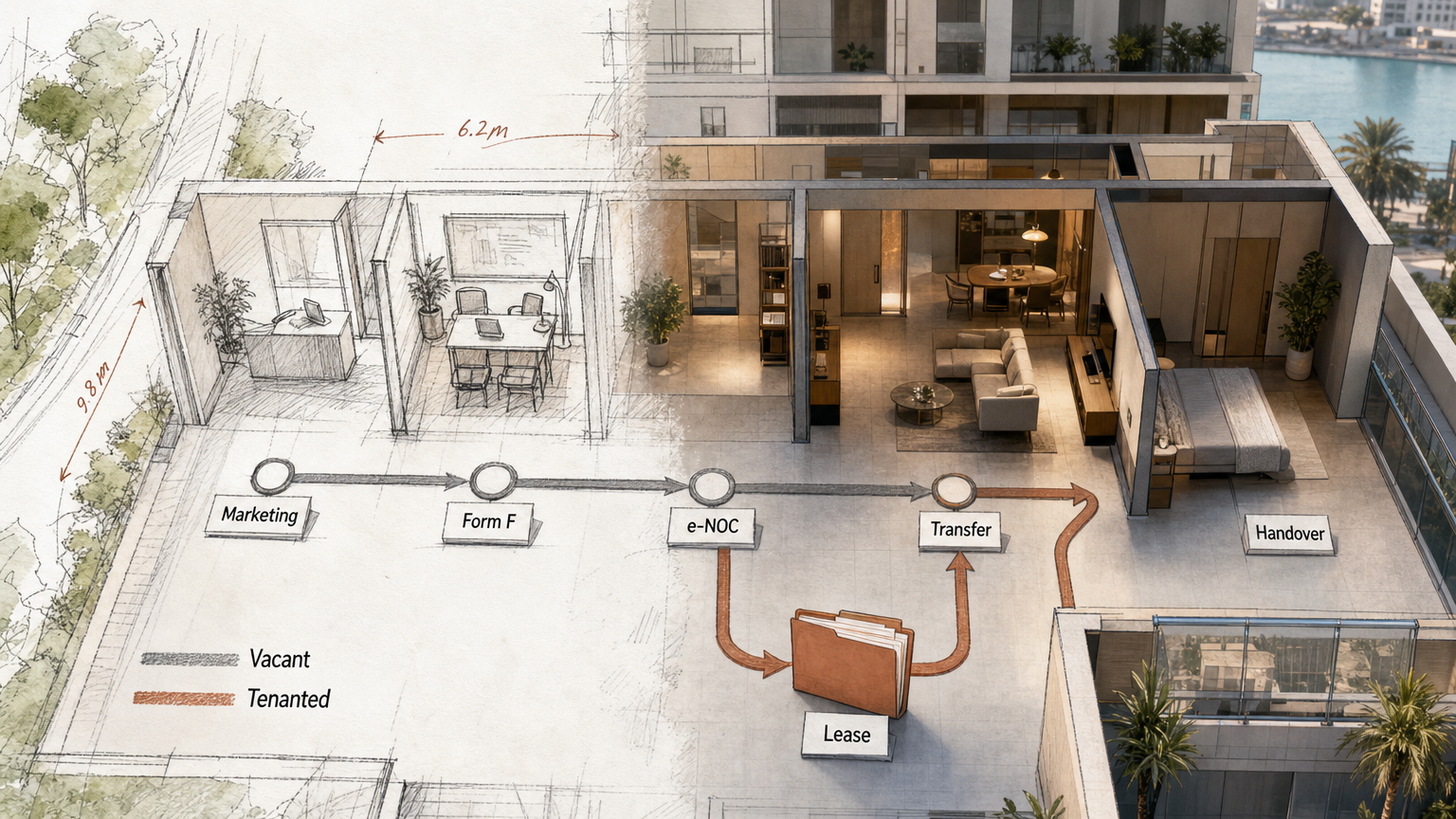
For the full sequence around these documents, start with the Dubai property sale process. This companion stays with the evidence file.
Marketing starts with title status and occupancy status
Before an advertisement goes live, the broker file needs to identify both the property and whether a registered tenancy exists.
RERA's official Contract A journey tells a broker to enter the latest title-deed details, validate the title, and confirm whether an Ejari contract exists. Contract A is the seller-to-broker marketing agreement. DLD's Real Estate Ad Permit service also says a broker needs a marketing-contract copy for online, classified and other listed advertising permits through Trakheesi, DLD's real-estate licensing and permit system, as of 18 September 2026.
For a vacant property, the supporting file can stop at current ownership, identity, Contract A where relevant, and the agreed access and handover facts. If an earlier tenant has moved out, DLD says Ejari cancellation is important after move-out because an uncancelled final record can prevent a later tenant account from being created. Vacancy should therefore be supported by the real handover and the current Ejari status, not by an advertising label alone.
For a tenanted property, keep the current unified tenancy contract and Ejari record beside Contract A. Also retain the tenant's contact details and the written record governing access for viewings. DLD's published ad-permit page does not make a tenant no-objection letter a universal sale-advertising document, so any access or developer request needs to be described as case-specific rather than added to the official checklist.
Form F must say what the buyer is taking over
Form F is where the occupancy fact moves from the marketing file into the seller-buyer agreement.
RERA defines Contract F as the agreement to sell a property between seller and buyer. The official Contract F includes tenancy-contract information on its first page, including whether the property is rented. Clause 18 says a lease agreement or restriction that may prevent the buyer from benefiting from the property must be clearly mentioned in the agreement.
That creates two evidence routes:
- Vacant route: record the agreed possession and handover condition accurately, supported by the actual occupancy and Ejari status.
- Tenanted route: identify the live tenancy in Form F and keep the unified lease, Ejari certificate or status, payment schedule, rent instruments and security-deposit record in the transaction file.
Contract F clause 13 also addresses the handover of cheques or cash payments arising from lease agreements, if any, on the transfer date. The practical record is a reconciliation that both sides can read: rent collected to date, rent still due, each cheque or payment instrument held, and the security deposit carried with the tenancy. This is evidence for the parties, not a claim that DLD's public transfer page requires every item as a title-transfer upload.
The developer e-NOC is shared by both routes
DLD's current registration page does not publish a separate e-NOC rule for vacant and tenanted homes.
For individuals, the Property Sale Registration service lists seller and buyer Emirates IDs for identity verification, or valid passports for non-resident foreigners, and a developer e-NOC in freehold areas through Dubai REST. Form F clause 17 separately says the seller settles outstanding penalties, taxes, charges or unpaid fees due to the developer or a third party before transfer.
Keep the distinction clean. The e-NOC is the developer's no-objection certificate for the transfer. Service-charge receipts or other clearance evidence may support the developer's process, but the issuer's current checklist controls what it asks for. A tenancy contract is not named as a universal e-NOC document on DLD's published sale-registration page as of 18 September 2026.
If the property is mortgaged, the sale follows an additional bank and release path that sits outside this vacant-versus-tenanted split. The canonical sale guide links that route separately.
Transfer day uses one DLD file and two handover states
At the trustee, the current DLD identity and e-NOC requirements are the same whether the ready property is vacant or tenanted.
DLD's service-centre sequence is document submission and verification, transaction audit, fee payment and output, buyer-information entry, then request creation. The service issues an electronic title deed and electronic map. Manager cheque is among DLD's listed payment methods, but the parties' payment mechanics still belong in the agreed transaction file.
For a vacant handover, the parties need a clear record of keys, access devices and the property's agreed condition. For a tenanted handover, the ownership changes but the lease evidence continues: current contract, Ejari status, tenant details, rent schedule, cheques or other rent evidence and security-deposit record.
This is why a tenanted file should not be reduced to “bring the Ejari.” Ejari is the registration record. The buyer also needs the underlying information required to perform the landlord role after transfer.
The tenancy handover continues after title transfer
The new title does not erase the current tenancy record.
The Rental Disputes Center FAQ says the tenant's rights remain unchanged when the owner sells. DLD's FAQ says that when the new owner retains the tenant, the new owner becomes the landlord, assumes the old landlord's obligations, and provides the tenant with updated contact information and a statement about the security deposit, as of 18 September 2026.
That makes the post-transfer file concrete:
- New electronic title deed.
- Current unified tenancy contract and Ejari certificate or status.
- Rent ledger showing amounts received and remaining.
- Schedule and physical handover of any rent cheques or other payment instruments.
- Security-deposit amount and supporting record.
- Written notice of the new landlord's contact and payment details.
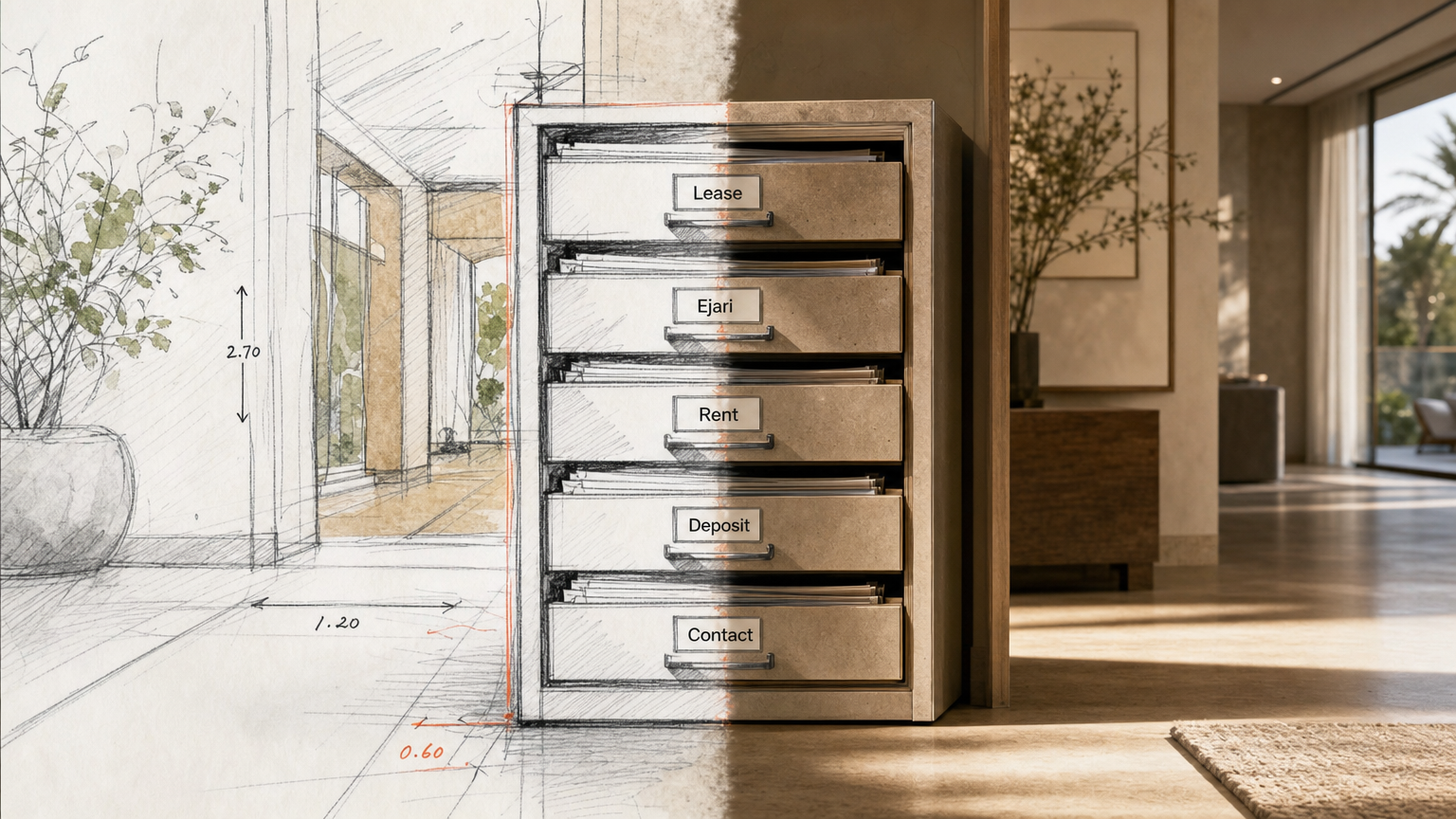
DLD says active Ejari details cannot be modified, while its FAQ also says property ownership or contact information can be changed after property approval. The current Ejari service operates through Dubai REST, DLD's Ejari system and Real Estate Service Trustee Centres. Because the correct action depends on the record's live status, the parties should verify the current ownership-change route with Ejari or a service trustee rather than cancel and recreate an active tenancy by assumption.
A sale and a vacant-possession process are not the same file
Calling a home “vacant on transfer” does not itself determine what happens to a current tenant.
RDC says a tenant's rights remain unchanged by a change of ownership. Its FAQ also directs parties to the current legal-notice process where a new owner seeks vacancy. The official pages do not support treating the sale contract, a marketing description or an unverified notice as proof that vacant possession will occur on a chosen date.
If a tenant has actually agreed to leave, keep the signed termination or surrender record, property handover evidence and the resulting Ejari status. If possession is disputed, or if the validity and effect of a notice matters to the transaction, verify the live position with RERA, RDC or a qualified legal professional before Form F fixes a handover promise.
The only official clock starts after the file is ready
DLD lists 25 minutes for Property Sale Registration as of 18 September 2026, but that clock is the registration service, not the whole sale.
A dated worked appointment sequence can therefore use only the steps DLD publishes:
Before the appointment
Complete the seller and buyer identity checks and obtain the developer e-NOC for a freehold property. Keep the tenancy handover schedule beside the transaction file where the property is rented.
At the trustee
Submit the documents for verification. The employee enters and audits the transaction data.
After the audit
Pay through an accepted method, complete the buyer-information step and receive the electronic output by email. DLD's listed service time is 25 minutes once the file is at this stage.
The marketing period, buyer finance, developer process and any tenancy or notice issue sit outside that official service time. They should not be folded into a promised completion date.
What is the quickest way to sell a property?
The only short official timing here is DLD's 25-minute Property Sale Registration service once the file is ready, as of 18 September 2026. Marketing, Form F, the developer e-NOC, finance and any tenancy process happen outside that service clock.
Do I need to be present in Dubai to sell my property?
DLD's Property Sale Registration description allows the seller and buyer or their legally authorised representatives to apply. A representative's authority and identity documents must meet DLD's current checks, so an overseas-owner file should be verified with DLD or the selected trustee before the appointment.
How much commission do you get in real estate in Dubai?
The seller-broker commission belongs in Contract A, so the signed agreement controls the amount and payment terms. The separate Dubai agent commission guide explains that document and cost line in detail.
What happens to a tenant when the owner sells?
RDC says the tenant's rights remain unchanged by the ownership change. DLD says the new landlord takes over the existing landlord obligations and provides updated contact information and a security-deposit statement, as of 18 September 2026.
Lida MoghaddamArchitect-turned-real-estate-specialist based in Dubai. She helps buyers, sellers, and investors read property with a designer's eye — structure, location, and long-term value.