Dubai move-in inspection record: evidence by defect type
 Lida Moghaddam
Disclaimer: This article is for general informational purposes only. It is based on cited public data and published under Lida Moghaddam's RERA-licensed masthead. It is not financial, legal, or investment advice. Dubai's property market moves quickly, so figures, yields, and rules may change or become outdated by the time you read this. Verify current information with the relevant authority or a qualified professional before acting. Read the full disclaimer.
Table of contents
As of 29 September 2026, the Rental Disputes Center's first-instance rental page lists four numbered core document groups, then invites supporting records such as correspondence, notices, utility bills, cheques and letters. A move-in inspection is most useful when it keeps each visible condition tied to a room, date, source file, notice trail and open question, without treating a photograph or worksheet as proof of cause, liability or a later deduction.
Start with the job of each record
The useful distinction is between what a record contains and what someone later concludes from it. Dubai's official unified tenancy contract records the parties, property, term, annual rent, deposit and payment method. It also allows additional terms in an addendum signed by the parties. Neither the contract nor the addendum is the same thing as a room-level observation log (DLD unified tenancy contract, accessed 29 September 2026).
The Dubai tenancy contract guide explains the wider lease structure. The table below keeps seven records in their proper lanes.
The official contract says an addendum may be attached when additional terms are needed and signed by the contracting parties. It does not publish a mandatory move-in checklist. The worksheet below is therefore an editorial tool for organising records, not a substitute for the contract, Ejari registration or an RDC filing requirement.
Use a room-and-defect worksheet
The worksheet works best when one line describes one item or defect. That keeps a wall mark separate from an air-conditioning report, even if both sit in the same room. The six columns are an editorial classification by withlida, based on general evidence-keeping practice rather than an official DLD or RDC form.
For a wider start-to-finish folder, use the sibling Dubai tenancy deposit evidence checklist. This worksheet sits inside that file as the move-in condition layer.
Record a defect without deciding it
The clean method is to preserve an observation before turning it into an allegation. The sequence below is general knowledge for practical record keeping. It is not an official filing procedure and does not predict how the RDC will assess a record.
Name the exact place and item
Use the room, surface and fixture name that another person can locate. "Bedroom 2, wall beside window" is more traceable than "wall damage".
Describe what is visible
State colour, location, shape, approximate extent and observed operation. Keep cause words such as leak, impact or misuse out unless a qualified report or agreed record supplies them.
Tie the observation to its source
Give the checklist line, image filename, video timestamp, inventory item or report reference. A wide view establishes location; a closer view records detail.
Separate the dates
Keep the inspection date, image capture date, notice date, access date and maintenance-report date as distinct fields. Do not convert one into another.
Record notice and response
Link the exact observation and files sent. Record delivery or receipt separately from agreement. If the response disputes the entry, keep both positions.
Leave the open question open
Use a question field for missing cause, history, allocation or proposed action. Closing the question without a source removes the distinction the file is meant to preserve.
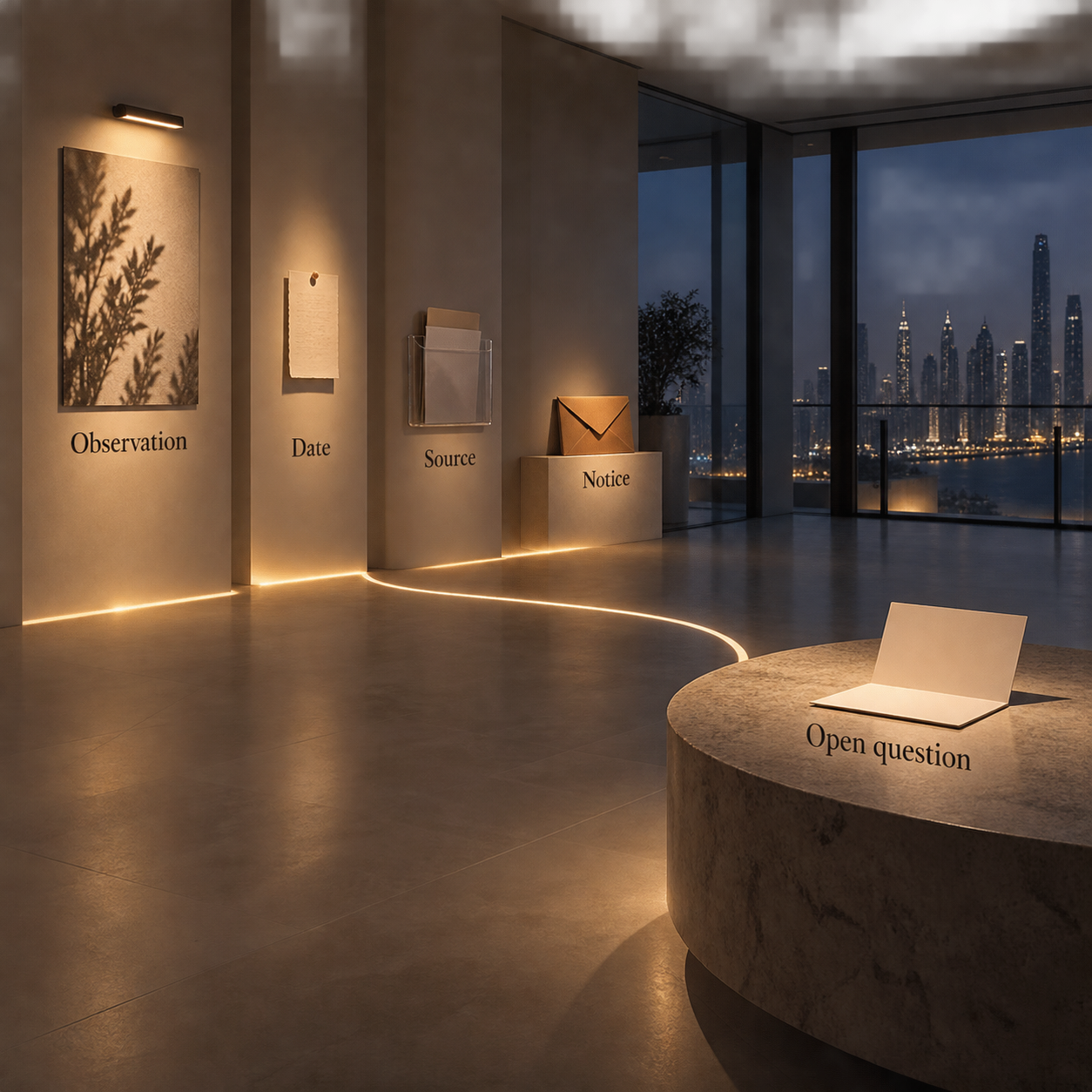
One worked example shows the language boundary. "Small brown mark, about the width of the window latch, on the bedroom wall below the right corner of the window; visible in IMG-014 and room-wide IMG-013, captured 29 September 2026" is an observation. "The window caused a leak and the tenant is not responsible" is a conclusion that those two images do not establish.
Keep the legal table within the official text
Dubai Law No. 26 of 2007 sets the condition and maintenance boundaries relevant to this record. Article 15 was superseded by Law No. 33 of 2008, so the amended wording controls that row. The English legislation pages also state that the original Arabic text prevails if the translations conflict.

The contract can change parts of the maintenance allocation where the law allows agreement. That is why the contract, addendum and condition record stay separate. The inspection sheet records facts. The signed terms record agreements. The law supplies the wider boundary.
Build any later RDC claim file separately
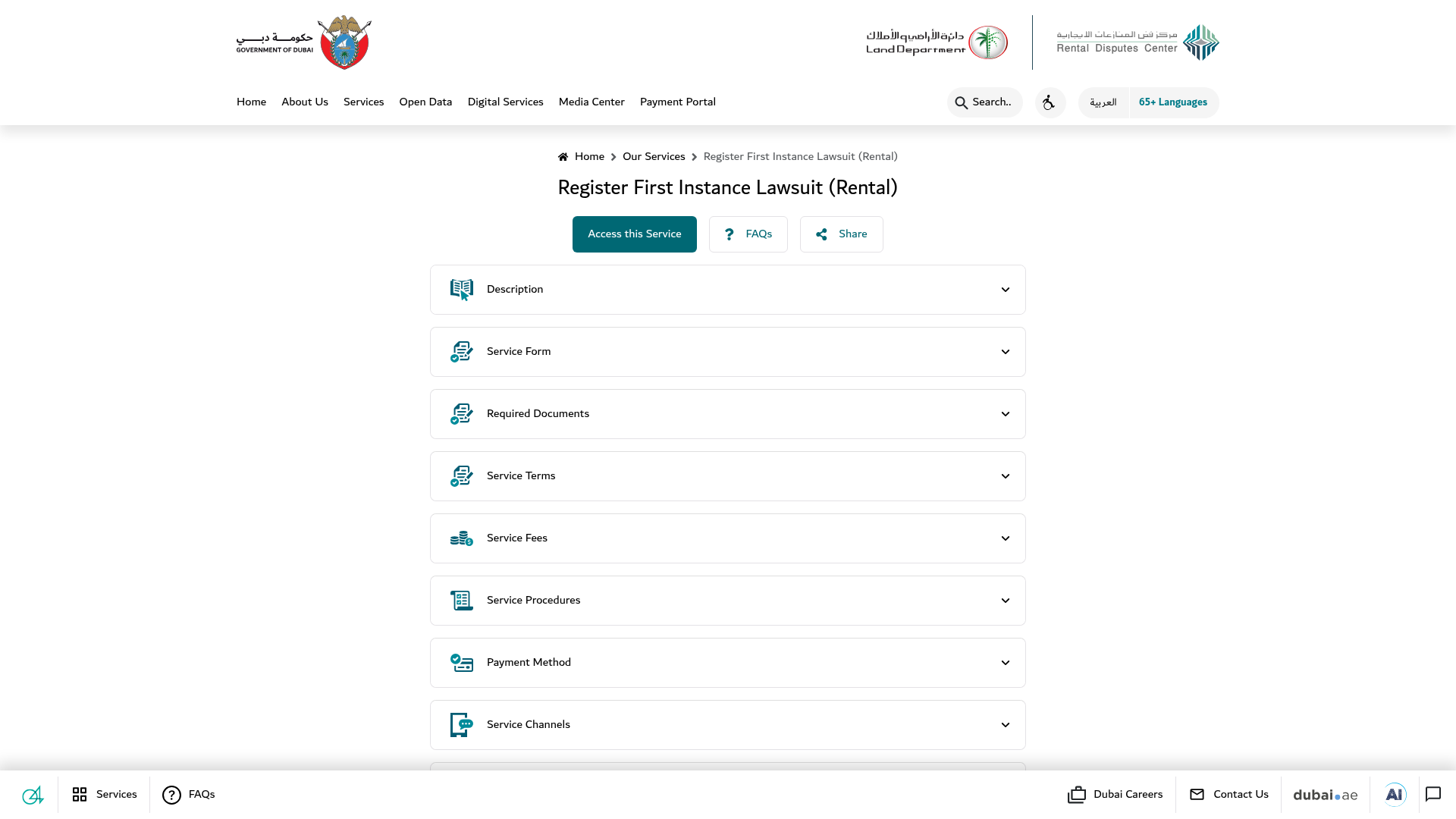
The move-in worksheet can become one supporting record in a later file, but it is not the claim file itself. As of 29 September 2026, the RDC first-instance rental service page lists four numbered core document groups: the latest lease or Ejari, identity evidence, a bank letter or statement showing the plaintiff's IBAN, and a notarised notice with the notification officer's report or registered post with acknowledgement for an eviction claim. It then gives examples of other supporting documents, including correspondence, notices, electricity and water bills, cheques and letters (RDC, accessed 29 September 2026).
The same page requires documents to be submitted in Arabic or legally translated into Arabic and uploaded in the sections described by the RDC system. That requirement belongs to the later filing stage. It does not turn the move-in worksheet into an RDC form.
For website filing, the current page lists five procedural steps: create or use an account and choose the service, enter data and upload documents, pay after electronic lawsuit verification, attend through the tele-litigation system, and receive the judgment through the website. These are published service mechanics, not a timetable or forecast for a result.
Before a later file is assembled, keep the record-level nouns exact:
The record is strongest editorially when another reader can follow its chain without repairing the labels: lease, addendum, observation, source file, notice, response, maintenance document and later claim bundle. The RDC decides its own process and assessment. The worksheet does not.
FAQ, checked 29 September 2026
Where can I file a complaint against a landlord in Dubai?
The official route is the Rental Disputes Center. Its first-instance rental service covers disputes arising between landlords and tenants and provides the current online and trustee-centre filing procedures (RDC, accessed 29 September 2026).
How can I resolve a rental dispute in Dubai?
The RDC page starts with the latest lease or Ejari, identity evidence, plaintiff IBAN evidence and the documents supporting the particular claim. An eviction claim has a specific notice and delivery-proof requirement on that page. The appropriate route depends on the claim and record, so the current RDC service classification needs to be checked directly.
What happens after an RDC rental claim is filed online?
As accessed on 29 September 2026, the service page lists data and document upload, payment after electronic verification, a hearing through the tele-litigation system and receipt of the judgment through the website. It labels registration completion as one business day, which is not the duration of the case or a result forecast (RDC).
How likely are you to win a rental dispute?
The official law and service page used here do not publish outcome odds. A checklist, photograph, report or notice may form part of a record, but withlida does not predict how the RDC will weigh it or decide responsibility.
Lida MoghaddamArchitect-turned-real-estate-specialist based in Dubai. She helps buyers, sellers, and investors read property with a designer's eye — structure, location, and long-term value.