
Ejari cancellation: evidence, channels and the next tenancy record
 Lida Moghaddam
Disclaimer: This article is for general informational purposes only. It is based on cited public data and published under Lida Moghaddam's RERA-licensed masthead. It is not financial, legal, or investment advice. Dubai's property market moves quickly, so figures, yields, and rules may change or become outdated by the time you read this. Verify current information with the relevant authority or a qualified professional before acting. Read the full disclaimer.
Table of contents
Online Ejari cancellation is free, while a Real Estate Services Trustee Centre charges AED 40 plus VAT and lists a 25-minute service time (Dubai Land Department, accessed 18 September 2026). Ejari is DLD's tenancy-registration system, and cancellation is the separate record-closing step after non-renewal or early termination, not simply the decision to leave.
The short answer: close the old record, then start the new one
The outgoing cancellation and the incoming registration are two separate DLD transactions. The current DLD service describes cancellation for an expired tenancy on a property that has been vacated, while its Ejari campaign also explains how an active contract is handled with owner approval (DLD cancellation service and DLD Ejari campaign, accessed 18 September 2026).
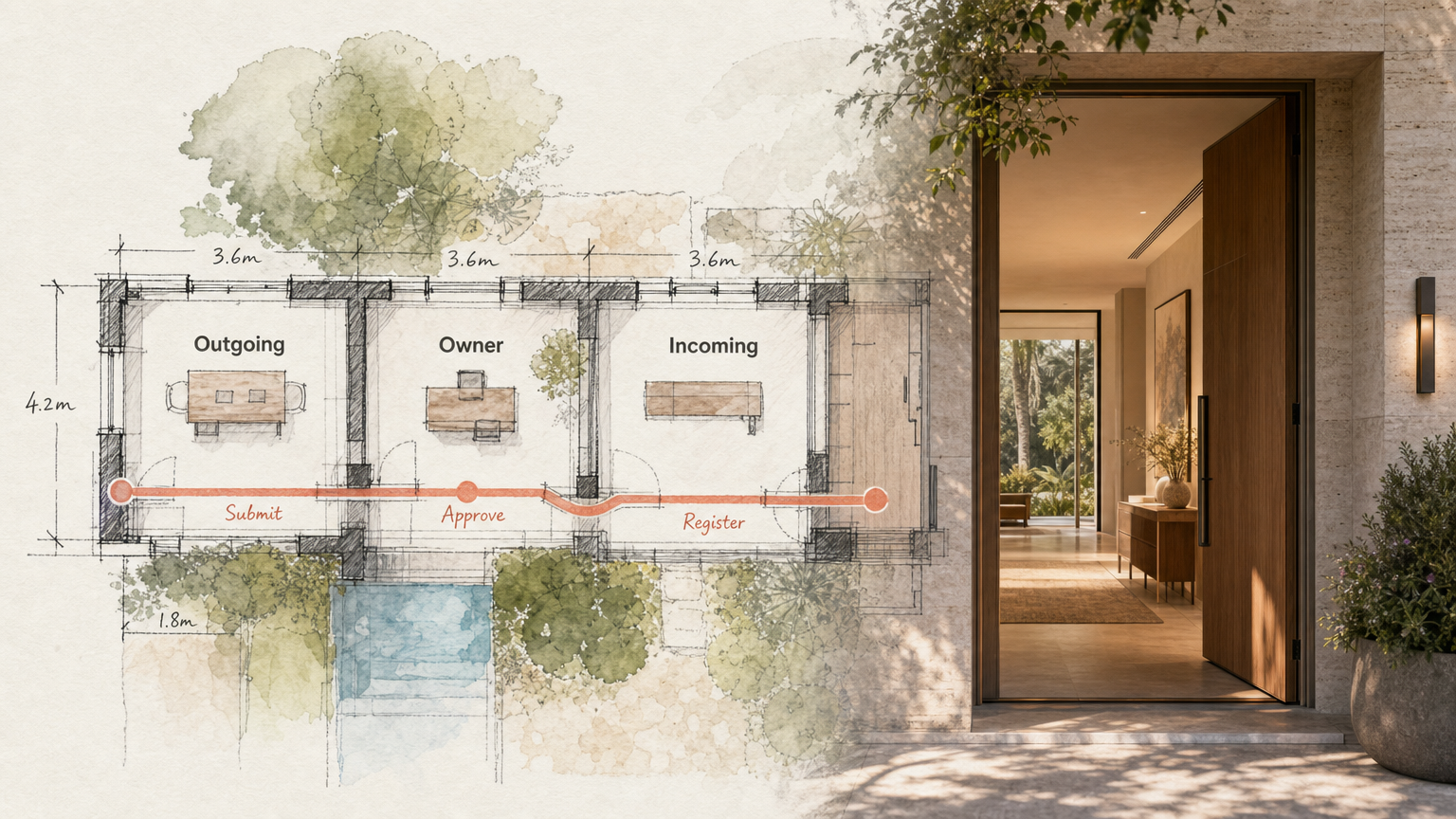
That distinction matters because DLD says a new tenant cannot cancel the previous tenant's Ejari. A tenant can request cancellation only for their own record (DLD FAQ, accessed 18 September 2026). Operationally, the outgoing tenant, landlord, property manager or authorised representative must finish the old-record step through a route available to that actor. The next tenant then registers the new tenancy as a separate request.
For the wider lifecycle, from the first registration through renewal, read how Ejari works in Dubai. This companion stays with the handoff between one record and the next.
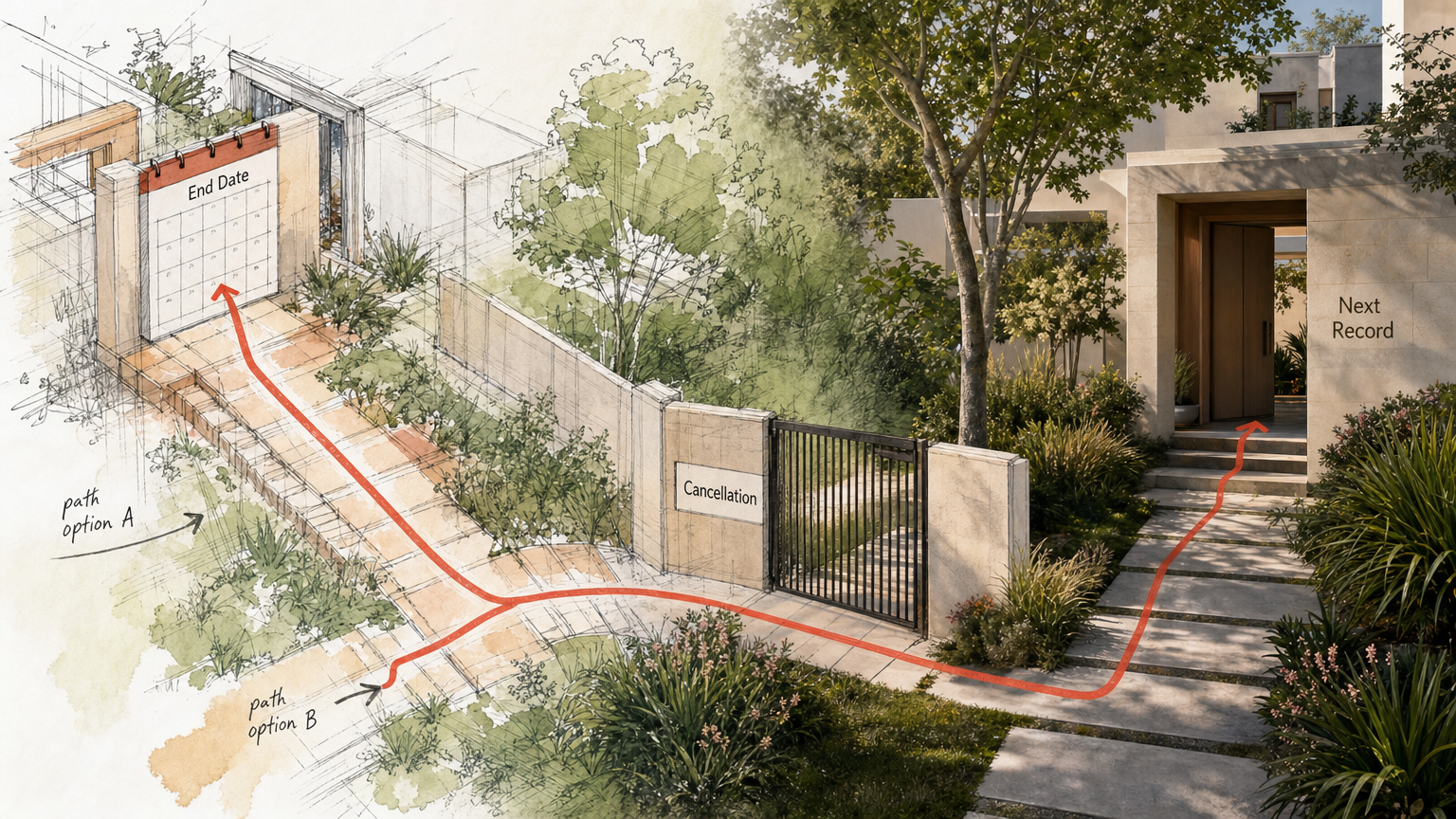
Cancellation, non-renewal and early termination are different
Non-renewal is the decision not to extend a tenancy. Ejari cancellation is the system transaction that closes the tenancy record. Early termination means the parties are ending a contract while it is still active, so DLD asks for extra owner evidence or approval.
Sources: DLD Cancel Tenancy Contract and DLD Campaign for Ejari Services, accessed 18 September 2026.
The practical point is not to use “non-renewal” and “cancellation” as if they are the same status. An end date explains why the tenancy is not continuing. The official cancellation request deals with the DLD record. If the contract is still active, the current DLD process calls for owner involvement rather than treating the matter as an expired-tenancy request.
Where the parties disagree about whether an active tenancy should end, the cancellation service page does not determine the underlying contractual issue. It lists the evidence and approval route. Each party can keep the discussion tied to the signed contract, documented communications and the current DLD or RERA process.
Evidence: what DLD lists and what it does not
For the trustee-centre route, DLD lists four evidence categories: the Unified Tenancy Contract, the applicant's Emirates ID, an official power of attorney when a representative applies, and an owner cancellation letter when the contract is still active (DLD cancellation service, accessed 18 September 2026).
The current public service card does not publish a separate document checklist for an online cancellation. It explains the online steps as logging in, selecting the service, completing any required data and submitting electronically. The careful route is to follow the live Dubai REST or Ejari prompts rather than assume that a third-party checklist is current.
The DLD cancellation card also does not list a final DEWA bill among its required cancellation documents. DLD's separate tenant-vacation guide treats the DEWA final bill and Ejari deregistration as different move-out steps (DLD tenant-vacation guide, accessed 18 September 2026). Keep the utility handoff in the move-out file, but do not describe it as mandatory Ejari-cancellation evidence unless the current official channel asks for it.
Who acts at each step
The cleanest handoff gives each actor one defined job. DLD's current pages distinguish the tenant, landlord, property manager and legal representative, while the incoming tenant has no authority to cancel someone else's record (DLD Ejari campaign and DLD FAQ, accessed 18 September 2026).
The 5-day point is an approval window, not a published completion promise. DLD says a cancellation request left unapproved for 5 days is automatically cancelled (DLD Ejari campaign, accessed 18 September 2026). If that happens, check which approval or evidence was missing before submitting again.
Channels, fees and published service times
Online cancellation has the lower official charge: DLD lists it as free. A trustee centre carries a service-partner fee of AED 40 plus VAT. The public card publishes a 25-minute service time only for the trustee route and gives no online completion time (DLD cancellation service, accessed 18 September 2026).
Channel eligibility still matters. For mobile applications, DLD says the tenant and landlord must be individuals and the owner's data must be current. For the Ejari system, licensed property-management companies, individual owners managing their own properties and properly authorised owner representatives have defined routes. For trustee offices, DLD lists the tenant or legal representative as applicant and the property owner or legal representative as landlord (DLD cancellation service, accessed 18 September 2026).
This is why “online is free” does not mean every case uses the same login or approval path. Match the actor and contract status to the official channel first. Where DLD has not published an amount or time, use the current service card rather than an estimate.
The handoff to the next tenancy record
Completed cancellation changes the outgoing record's status, but DLD does not issue a cancellation certificate or cancellation receipt. Its current Ejari FAQ says the cancelled lease record becomes immediately invalid in the system without an additional certificate (DLD Ejari campaign, accessed 18 September 2026).
That creates a simple evidence rule: retain your submitted-request details and related correspondence, then verify the final contract status in Dubai REST or Ejari. Do not promise an incoming tenant a certificate that DLD says it does not issue. A trustee-centre payment receipt can show that a paid service transaction occurred, but it is not the separate cancellation certificate DLD says does not exist.
The new tenancy then follows the registration service, with its own contract, approval and fee. DLD's current totals and published times are:
Source: DLD Register / Renew Tenancy Contract, accessed 18 September 2026. The AED 177.75 online total comprises AED 100 registration, AED 10 knowledge fee, AED 10 innovation fee, AED 55 service-partner fee and AED 2.75 VAT on that partner fee.
For a tenant-led new registration, DLD says landlord approval is required. If the landlord does not approve within 5 days, the registration request is automatically cancelled (DLD Ejari campaign, accessed 18 September 2026). That is a separate approval clock from the cancellation request.
The safest record sequence is therefore visible and sequential: check the outgoing status, complete any required landlord approval, verify the cancellation in the official system, then submit the new contract through the current registration route.
FAQs, checked 18 September 2026
How do I cancel Ejari in Dubai?
Use Dubai REST, the DLD Ejari system if your actor type is eligible, or a Real Estate Services Trustee Centre. DLD's current route asks the user to log in or attend the centre, provide the required information or documents, submit, and complete any approval (DLD, accessed 18 September 2026).
Who can cancel an Ejari record?
DLD provides routes for landlords, tenants, qualifying property-management companies and authorised representatives. The exact channel and approval depend on the actor and whether the contract is expired or still active (DLD, accessed 18 September 2026).
What documents are required for Ejari cancellation?
For the trustee route, DLD lists the original Unified Tenancy Contract, applicant Emirates ID, an official power of attorney for a representative, and an owner cancellation letter if the contract remains active. The public service card does not state a separate online upload checklist, so follow the current app or system prompts (DLD, accessed 18 September 2026).
How much does Ejari cancellation cost and how long does it take?
Online cancellation is free. Trustee-centre cancellation costs AED 40 plus VAT and carries a published service time of 25 minutes. DLD does not state an online completion time on the current public card (DLD, accessed 18 September 2026).
Can a new tenant cancel the old tenant's Ejari?
No. DLD's FAQ says tenants can request cancellation only for their own Ejari contracts. The outgoing tenant, landlord, manager or authorised representative must use the applicable route for the old record (DLD, accessed 18 September 2026).
Lida MoghaddamArchitect-turned-real-estate-specialist based in Dubai. She helps buyers, sellers, and investors read property with a designer's eye — structure, location, and long-term value.