Dubai launch prices versus area evidence: a verification method
Dubai Land Department's current transaction table separates amount, property size and room count, the minimum fields for a like-for-like AED/sqft check (DLD, page last updated 8 September 2026). A hypothetical AED 2.4 million launch home at 1,200 sqft is AED 2,000/sqft, but that figure becomes useful only after the area evidence matches its unit type, size basis, evidence class, payment timing and period.
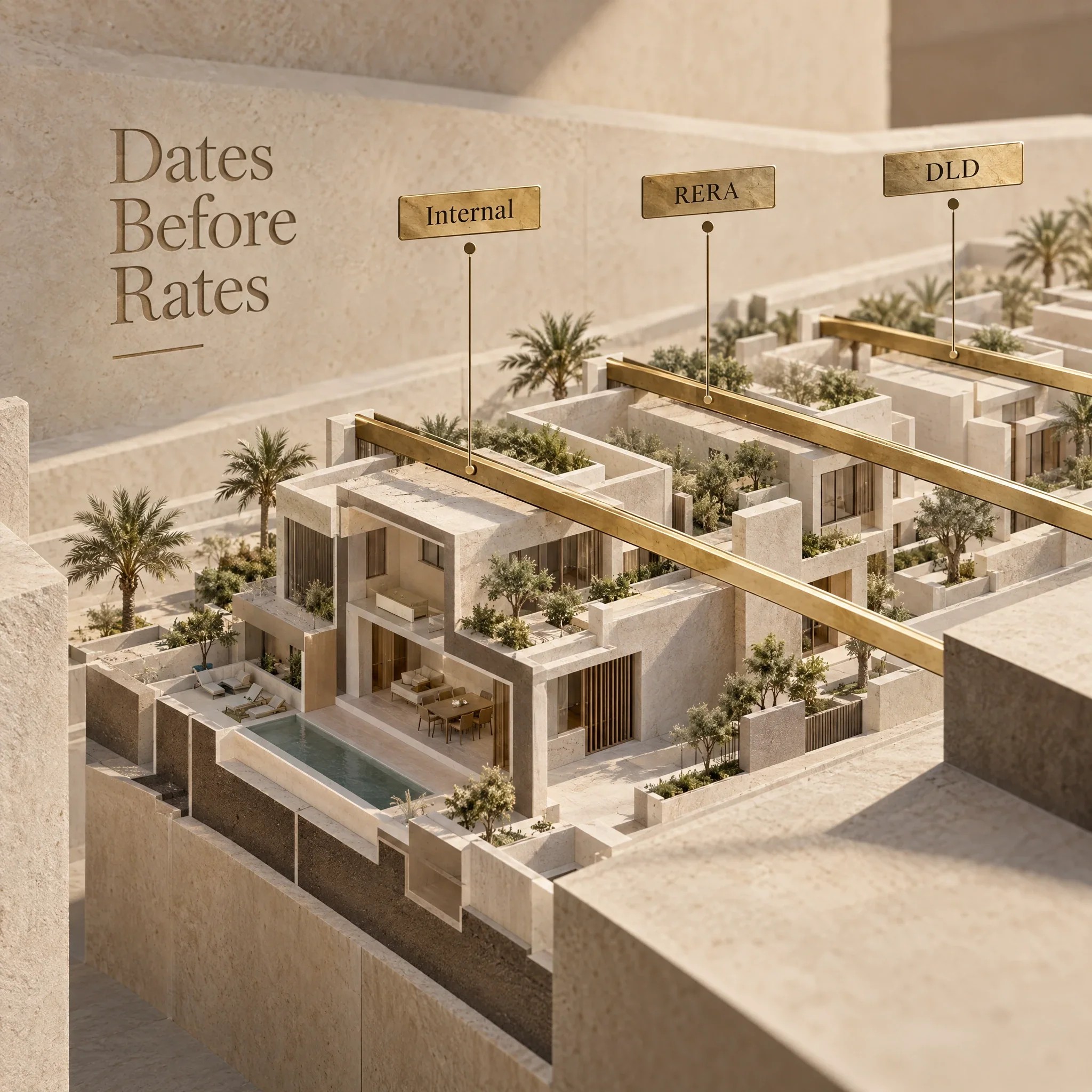
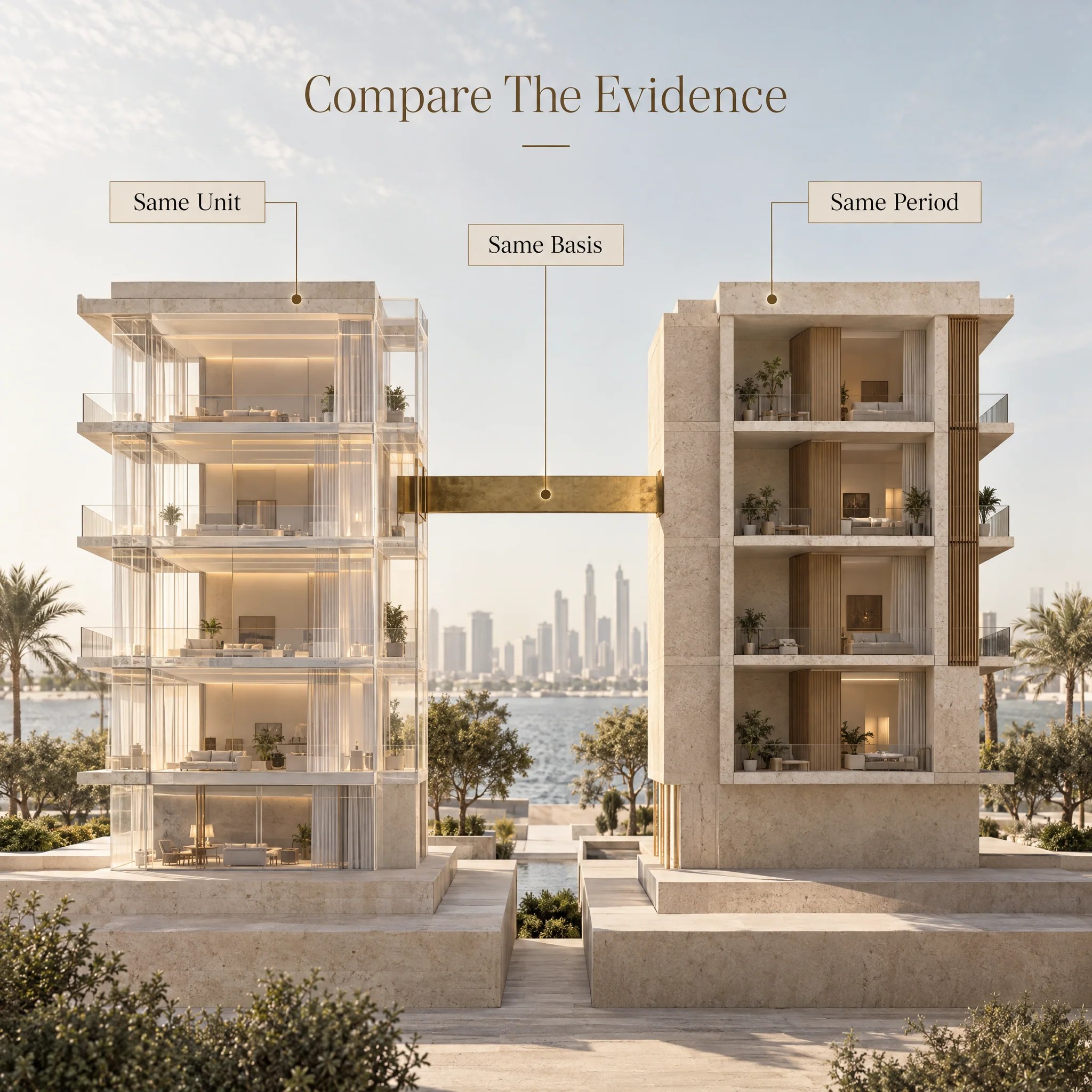
A launch price must pass five matching tests
The price gap has meaning only when five fields match closely enough to compare. Start with the exact launch quotation, then reject or label every area observation that differs on a material field.
This is the same comparables discipline used in a property valuation built from transactions, applied earlier in the buying process. A sea-facing two-bedroom launch apartment should not be tested against a community-wide figure that combines studios, villas and older phases. The wider Dubai house price index can supply context, but it cannot replace a matched unit set.
Use the source that proves each claim
The strongest source changes with the claim. DLD's current data page exposes transaction date, amount, transaction size, property size, room count, master project and project fields. That makes it the primary record for a completed-transfer comparison, although the public interface is form and captcha dependent (DLD, checked 18 September 2026).
Bayut makes that last distinction explicit in its H1 2026 report. Its disclaimer says the figures reflect advertised listing prices and are not completed transaction prices unless stated otherwise (Bayut, updated 2 September 2026). An asking-price series can still be useful, but it must stay labelled as asking evidence throughout the table and conclusion.
Build one normalization sheet before reading the gap
The normalization sheet should make mismatches visible, not smooth them away. Copy the wording used by each source, preserve the source date and record any conversion beside the original value.
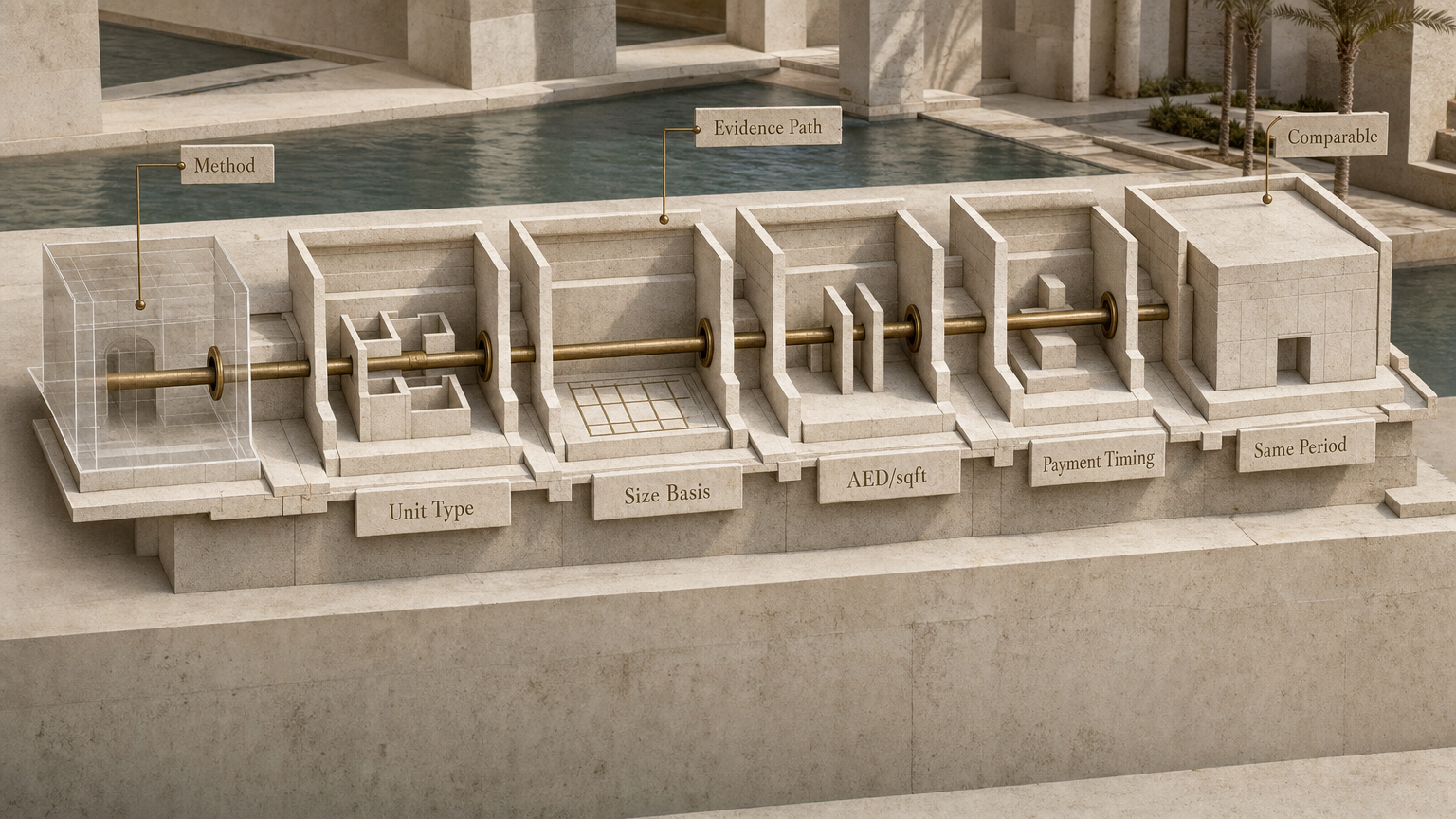
The area denominator deserves special attention. DLD's tables distinguish transaction size and property size, while its unit data includes property size, balcony area, common area and actual common area fields (DLD, checked 18 September 2026). A brochure may use saleable area while a data series uses another field. If the definitions cannot be reconciled, show both and mark the AED/sqft comparison as unresolved.
Worked calculation: a labelled hypothetical example
This example teaches the arithmetic only. Every price, size and payment split in this section is hypothetical, not a statement about a real project or area.
Suppose a current developer quotation identifies a two-bedroom apartment at AED 2,400,000 with a stated saleable area of 1,200 sqft. Three recorded transfers from a matched building set use the same property type, bedroom count, area basis and evidence window.
The median matched rate is AED 1,850/sqft. The launch rate is AED 150/sqft higher, calculated as AED 2,000 minus AED 1,850. Relative to the matched median, the nominal gap is 8.1%, calculated as AED 150 divided by AED 1,850.
That 8.1% is a description, not a verdict. The next questions are whether the launch unit has a different view, floor, specification, amenity allocation or completion state, and whether those differences are documented. Remove any observation that fails the type or area-basis test. Keep a remaining difference in the notes rather than inventing an adjustment.
Read payment timing beside price, not inside it
Payment timing can change the economic comparison even when nominal AED/sqft is identical. Keep the schedule as dated cash flows unless the analysis separately states and explains a discount rate.
For the same hypothetical AED 2,400,000 launch unit, assume 20% is due at booking, 40% through construction and 40% at completion:
A ready-property transfer commonly presents a different timing pattern because the purchase price is settled at transfer. The comparison sheet should therefore show the two schedules side by side. If someone converts future instalments to a present value, the chosen rate, dates and formula become assumptions that need their own column. They should not be buried in an “effective price”.
Verify project registration and escrow separately
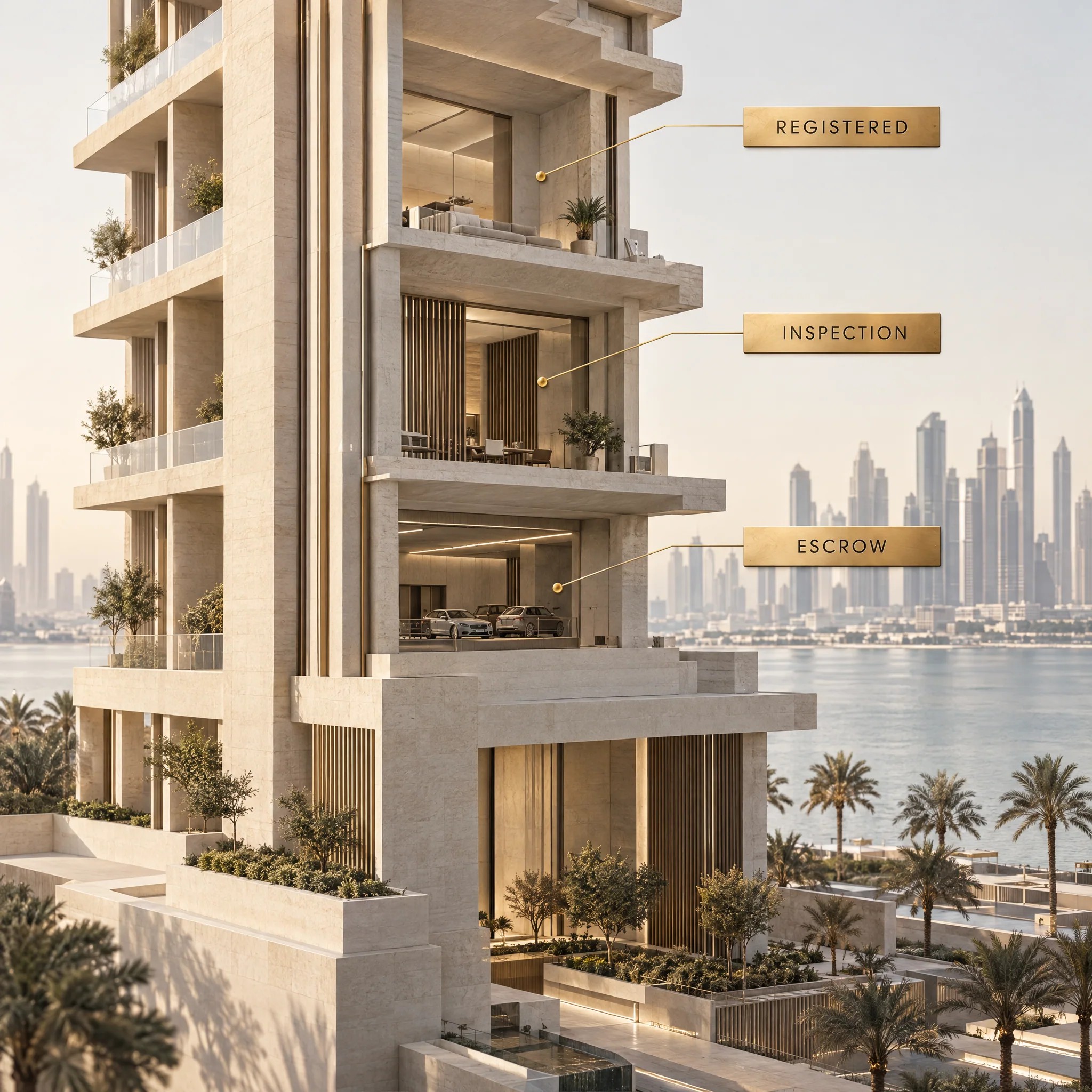
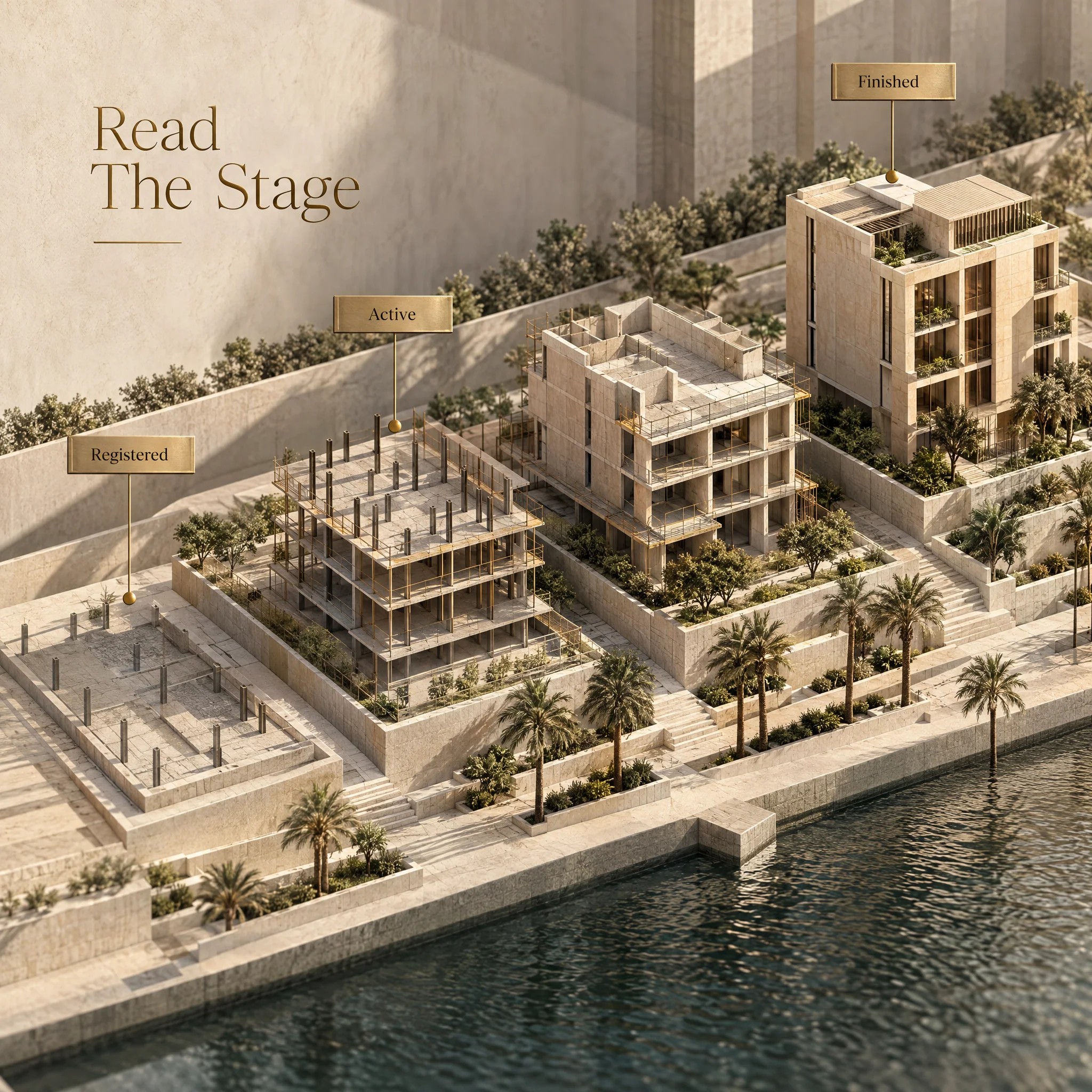
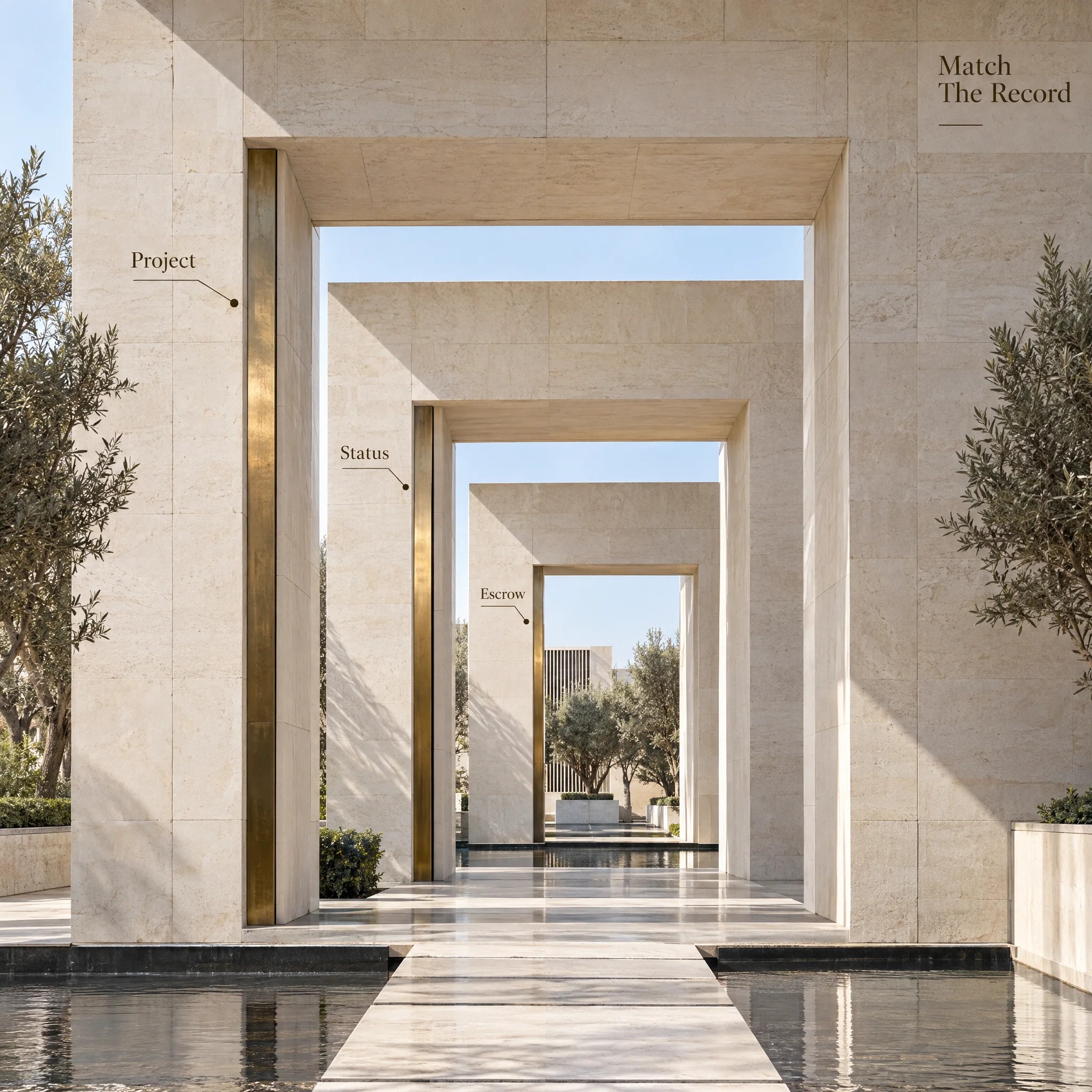
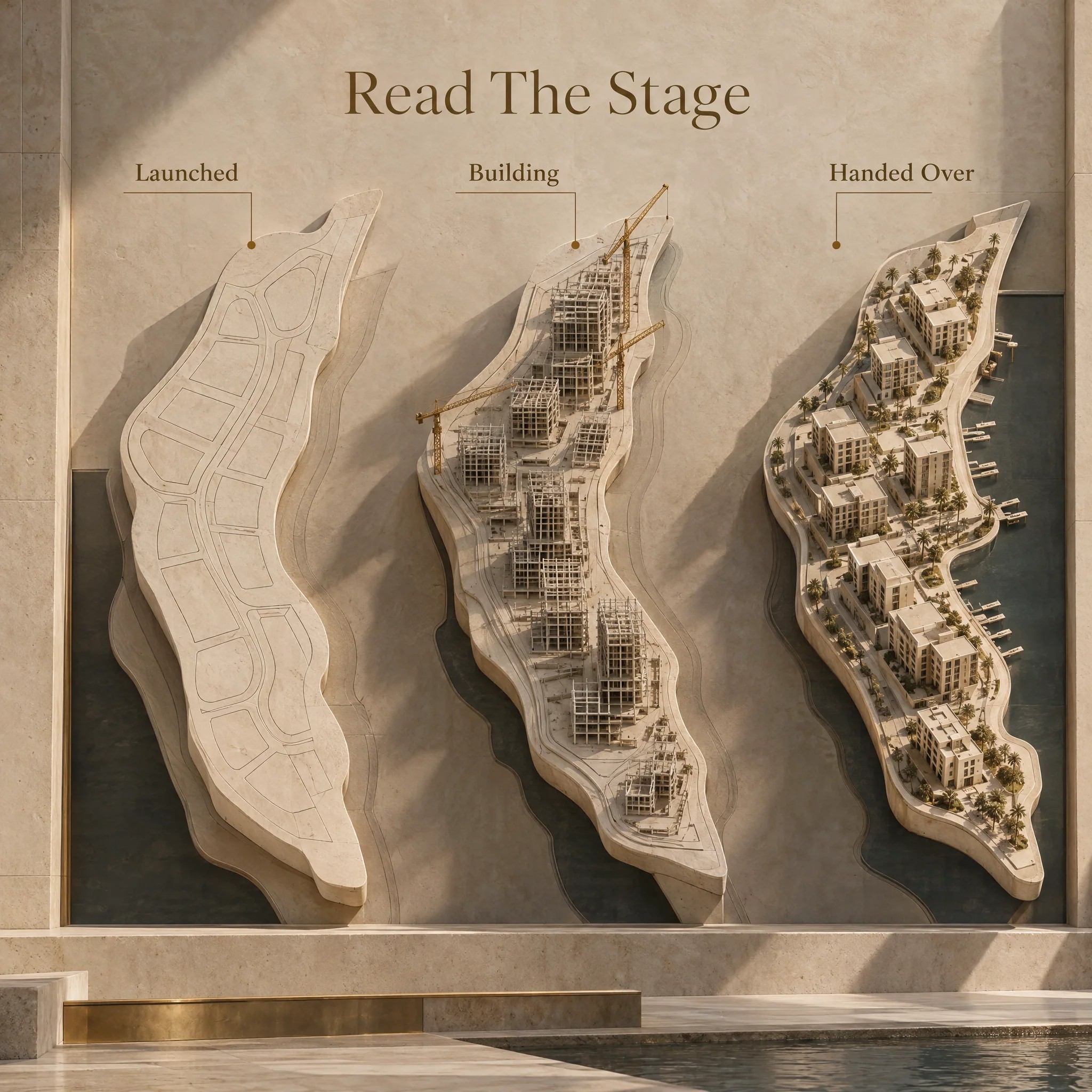
Escrow verification answers a registry question, not a valuation question. DLD's Project Status Enquiry, also called Mashrooi in Dubai REST, accepts a project name or project number and displays project, developer, completion and escrow fields (DLD, page last updated 8 September 2026).
DLD says Dubai REST provides off-plan users with the recorded completion percentage, actual project pictures, escrow account number and owner payments due (DLD, checked 18 September 2026). Its escrow FAQ also says all amounts received from buyers of off-plan units are deposited in the project escrow account (DLD, checked 18 September 2026).
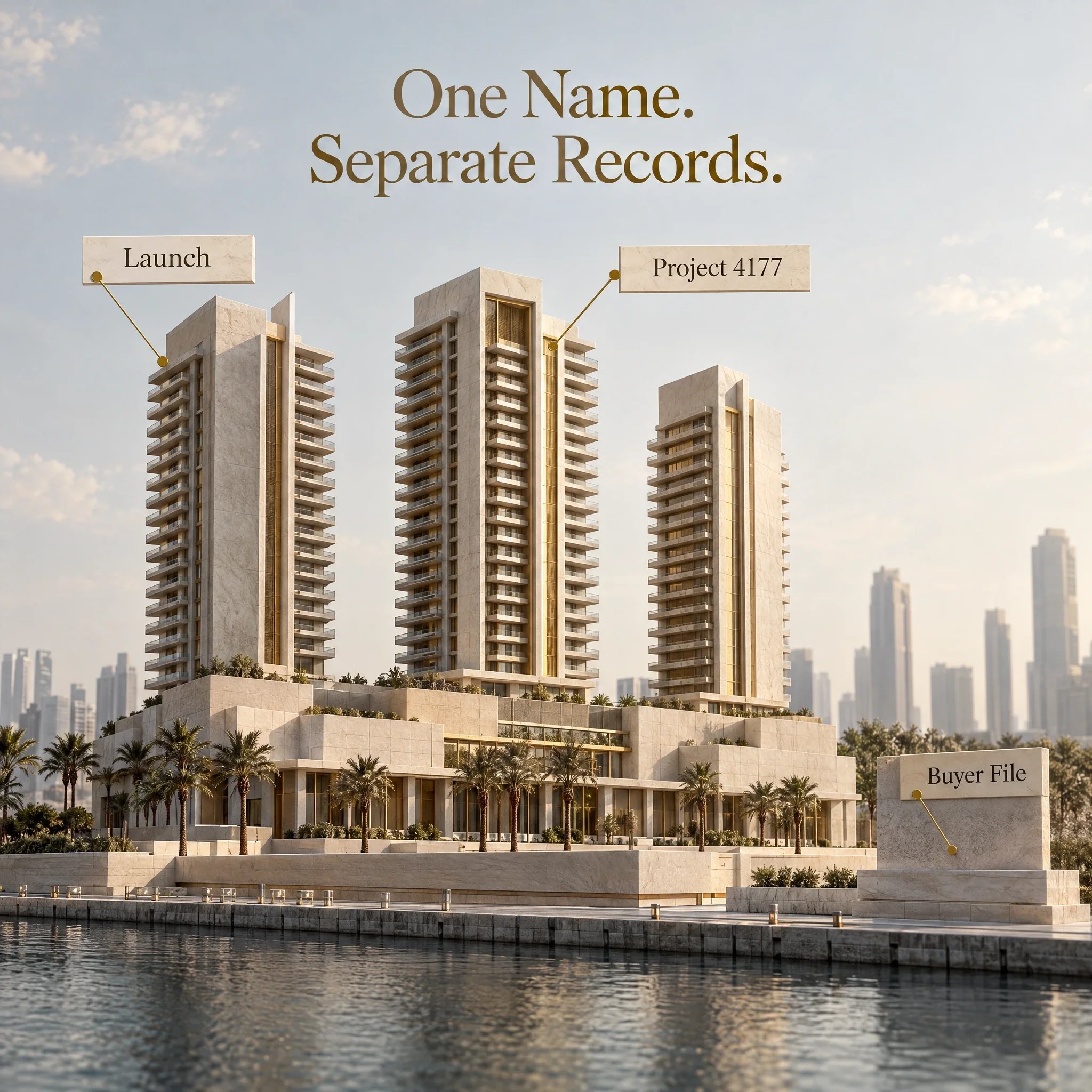
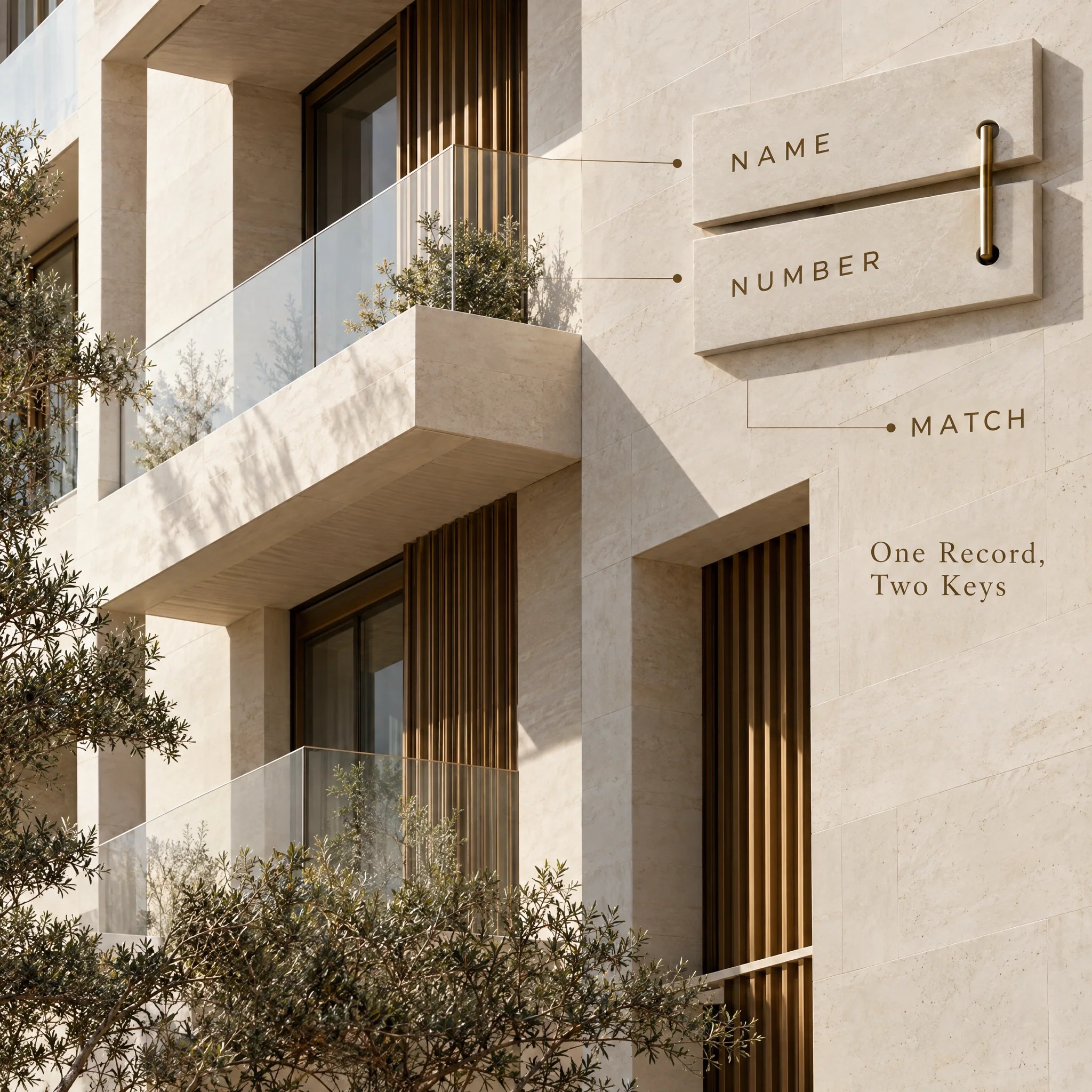
Match the project identity
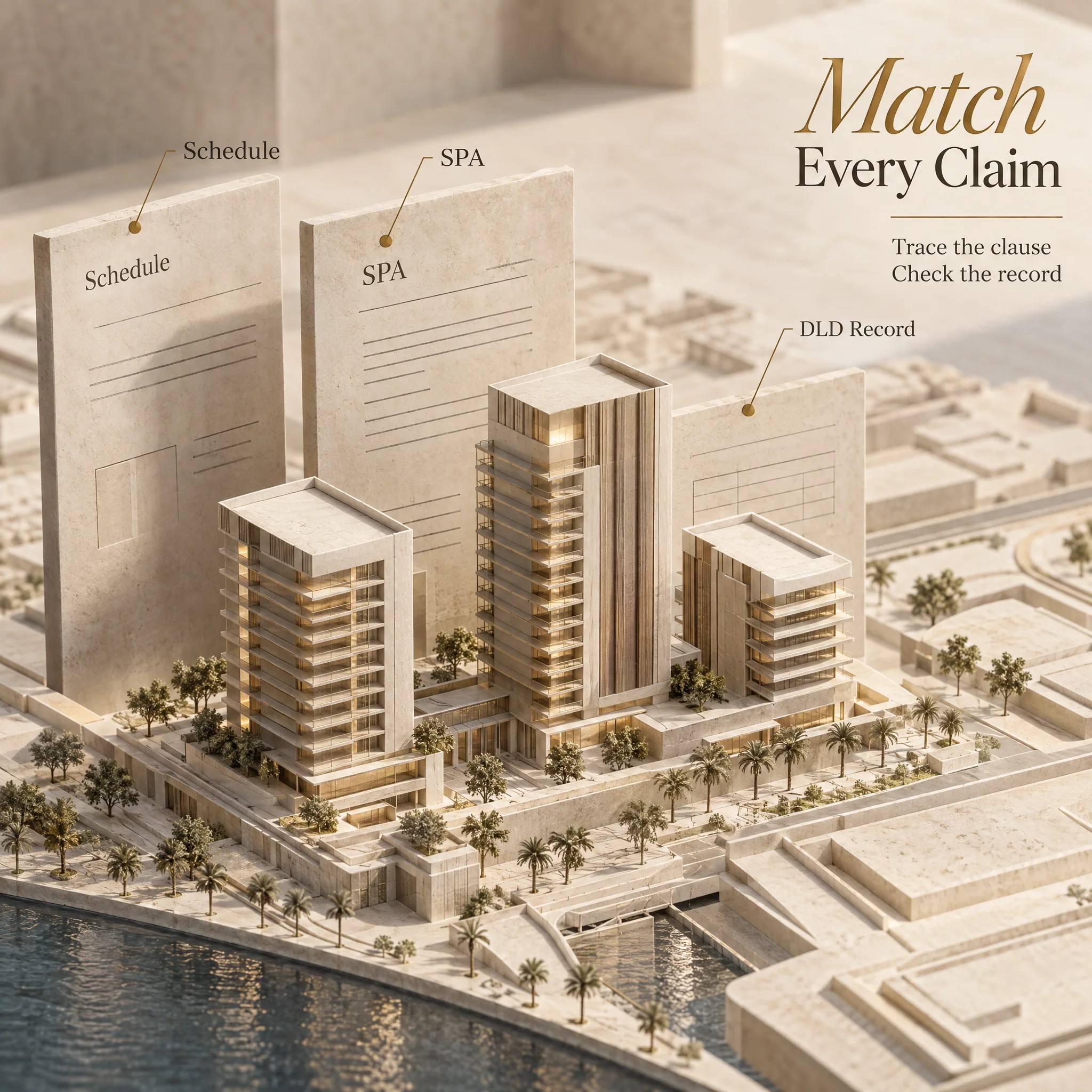
Search the exact project name and DLD project number. Compare the registered developer name and number with the reservation form and sale and purchase agreement.
Match the payment account
Compare the bank and escrow details shown in the DLD record with the beneficiary details in the payment instructions. Resolve any difference through DLD, RERA or a licensed professional before transferring funds.
Save the dated record
Retain the result date, completion field and the documents used for the match. The off-plan registration workflow explains where this project check sits in the wider purchase process.
An escrow match supports the conclusion that the named account belongs to the registered project at the time checked. It does not establish that the launch price matches area evidence, that a future milestone will occur on a particular date, or that the property will reach a particular resale or rental result.
Keep an evidence file that another reader can reproduce
The final output should be a short evidence pack, not a single percentage. Save the dated launch quote, layout and area definition, payment schedule, DLD project-status capture, matched transaction export or provider methodology, and the calculation sheet.
End with one of three neutral findings:
- Matched: unit type, area basis, evidence class, timing and period align closely enough to calculate a gap.
- Partly matched: the arithmetic is valid, but one or more disclosed differences limit interpretation.
- Not comparable: a material field such as unit type, size basis or evidence class does not align.
That wording keeps a clean boundary between what the sources establish and what remains a buyer's judgement.
What is the next major project in Dubai?
The live search results surface many launch directories, but “next major” is not a verification category. Identify the exact project and phase, then check its DLD project number, current developer terms and matched area evidence before interpreting a headline price.
What are the latest developments in Dubai?
For residential off-plan projects, use DLD's current project-status and real-estate-data pages to separate a registered project record from a launch announcement. DLD's data page includes project status, completion and escrow fields (DLD, checked 18 September 2026).
What are some newly developed areas in Dubai?
An area name alone is too broad for price comparison. Match the project's official DLD area and master-project fields, then filter by property type, room count, area basis and period.
Is an asking price the same as a transaction price?
No. An asking price is the advertised amount, while a transaction price records a completed deal. Bayut's H1 2026 report says its advertised figures are listing prices unless it explicitly identifies transaction data (Bayut, updated 2 September 2026).