Jumeirah Lake Towers (JLT): AED/sqft, yield, best fit by buyer profile (2026)
Jumeirah Lake Towers' one-bedroom apartments averaged AED 1,549,000 to buy and AED 88,000 a year to rent in Bayut's preceding twelve months of listings, accessed 9 October 2026. These are separate asking-price samples. For a household, the useful comparison is the apartment's layout, its exact cluster address, the route to DMCC or Sobha Realty station, and the costs attached to its property record. (Bayut area guide.)
What do homes cost?
Bayut's apartment-size averages provide a starting point for comparing asking budgets. They describe advertisements across the district, with separate samples for sale and rent.
Sale asking averages
Source: withlida.com, 9 October 2026. Values: Bayut's JLT area guide, based on property listings over the preceding twelve months, accessed 9 October 2026. These are asking sale averages, rather than completed-sale prices or individual apartment valuations.
Annual-rent asking averages
Source: withlida.com, 9 October 2026. Values: Bayut's JLT area guide, based on property listings over the preceding twelve months, accessed 9 October 2026. These are annual asking rents, rather than registered tenancy-contract averages. Bayut's source window rolls with its updates; it is not a fixed quarterly period.
Last verified: 9 October 2026. Access dates identify when the sources were read, rather than when each source changed. Checked by the publication's independent check, 9 October 2026.
An apartment's bedroom count does not establish its floor area, internal layout, furnishing, view or included services. Those details belong to the particular home and its documents. For a household comparing homes of the same size, the tables establish a common reference before those differences are considered.
How do clusters differ?
JLT's clusters identify addresses within a mixed residential and commercial district developed and managed by the Dubai Multi Commodities Centre, or DMCC. The official community page lists 87 towers; the official FAQ identifies 26 lettered clusters, A to Z, as verified on 9 October 2026. The district-wide tower count includes more than residential apartment buildings. (JLT about page and interactive map, official JLT FAQ.)
The official map allows filtering by building category. A cluster can contain different uses, so a letter alone does not establish that every building there is residential. These examples reproduce the map's address and category information.
Source: withlida.com, 9 October 2026. Address and category rows read from the dataset loaded by DMCC's interactive JLT map, accessed 9 October 2026. MBL Residence's name is shortened from the map entry; the table does not assert construction or occupation status. Map names and categories do not establish current facilities, handover status or apartment availability.
How is a JLT address read?
The building name and cluster letter work together. Jumeirah Bay 1, 2 and 3 are mapped in Cluster X; the map categorises the first as residential and the other two as offices. Bonnington Hotel JLT is in Cluster J, while Almas Tower has its own separate office marker. These address relationships come from the official map, accessed 9 October 2026.
The map also includes named places beyond the lettered clusters. The cluster sequence therefore does not define every place within DMCC's mapped community scope, and the official tower count is not calculated by multiplying a standard cluster layout.
A building address and a retailer's entrance are different details. A tower marker alone does not establish that a named supermarket currently occupies it. Groceries, clinics and other daily stops need their own current business address and usable entrance, rather than an assumed location carried across from the tower's name.
For households comparing apartments, the useful distinction is concrete: the correct residential building, the entrance used each day, the apartment layout, and the facilities documented for that building. The cluster table supplies the address reference; it does not assign a price or service-charge tier.
Which station serves an address?
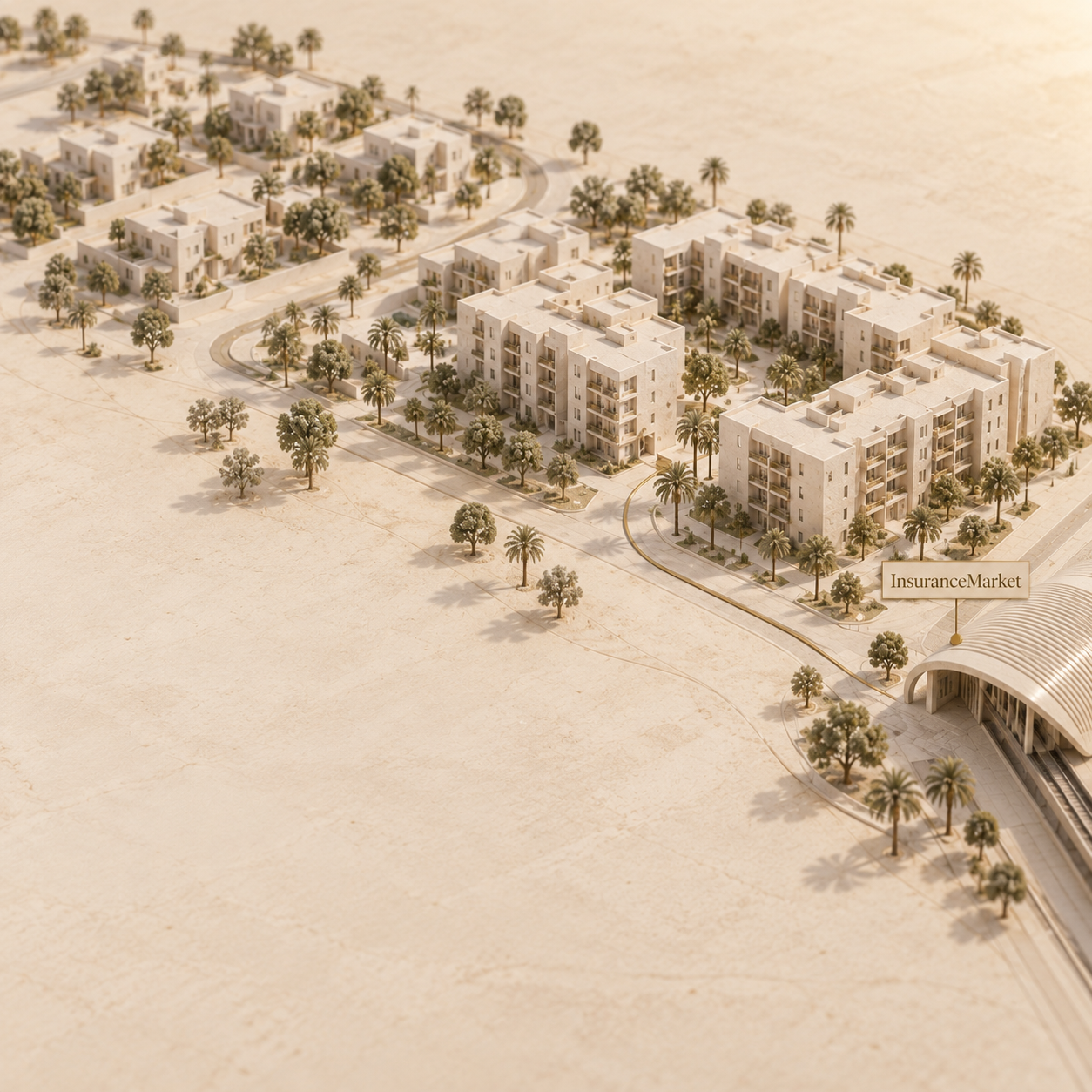
DMCC, R37, and Sobha Realty, R36, are separate Dubai Metro Red Line stations on RTA's current map, accessed 9 October 2026. Both serve the JLT area; the relevant entrance and route depend on the particular address. (RTA Metro and Tram stations map.)
The former Jumeirah Lakes Towers station name belongs to DMCC, as identified in DMCC's renaming notice, accessed 9 October 2026. Sobha Realty was previously Dubai Marina station; RTA's naming-rights announcement is dated 9 August 2021. (RTA announcement, accessed 9 October 2026.)
What makes a route useful every day?
A household route starts at the building entrance and ends at the station entrance, workplace or school gate actually used. It includes the available crossings, podium exits, ramps or lifts, and any changes around works. A map pin's straight-line proximity cannot supply a reliable walking time for that journey.
JLT is located along Sheikh Zayed Road opposite Dubai Marina, according to the official JLT FAQ, accessed 9 October 2026. A car journey also needs the correct parking exit and road access. No single driving-time or distance figure describes all JLT addresses.
The official map, accessed 9 October 2026, identifies JLT Park and recreation markers including a skate park, basketball court, football pitch and amphitheatre. These locations help a household understand its surroundings; the markers do not certify opening hours or access conditions.
For education, the official community FAQ, accessed 9 October 2026, distinguishes nurseries inside JLT from schools outside the district. A family's specific campus, admission arrangements and school-transport route remain separate questions. A cluster letter does not establish a school catchment.
Which daily routine fits a home?
The closest household fit is the apartment whose layout and actual routes match the people living there. Those needs can be expressed without assumptions about nationality or an apartment's investment performance.
A daily Metro commute
The relevant comparison is the route from the building's usable exit to DMCC or Sobha Realty, then the onward journey. An entrance that connects clearly to the required station is a closer fit for a regular rail commuter. RTA's current station names and DMCC's address map provide the reference points, accessed 9 October 2026.
Work within the district
For someone working in JLT, the exact office building and access route matter more than the district label. The official map's residential and office categories help distinguish the home address from the work address. Living in the same district does not by itself establish a door-to-door journey time.
Children, home working or shared living
The apartment's usable rooms, storage and circulation need to accommodate the household's routine. For children, that routine also includes the specific nursery or school journey. Bedroom count and a lake-facing description cannot answer those layout and transport questions on their own.
Groceries, parking and accessible entrances
The relevant route is the one used with shopping, a pushchair or mobility equipment. Building-management documents establish parking and building facilities; current business addresses establish daily stops. A household relying on these features needs evidence for the particular building and entrance.
What costs need a property record?
Service charges belong to a matched property and budget year; purchase charges depend on the transaction, and move-in activation depends on the utility account and meter type. An area average cannot establish those costs for an apartment.
How is the service charge found?
Dubai Land Department, or DLD, provides a Service Charge Index, the official enquiry for approved building charges. Its certificate route requests certificate number, certificate year, property type and budget year, as of 9 October 2026. The certificate's issue year and the charge's budget year are separate inputs. (DLD enquiry form.)
No project-specific approved JLT rate was obtained for this refresh on 9 October 2026. The page therefore states no district-wide rate or after-charge return band.
An owner-document lookup has three parts:
- The owner's title deed, the official ownership document, supplies the certificate and property details. The relevant budget year identifies the charge period being examined.
- The DLD enquiry matches those details, or the appropriate project selection, to the returned approved record. The exact selection, use, period and components stay with the result.
- The owner's unit statement and management documents establish the amount billed, applicable area and included components. A number copied from another tower or budget year cannot supply that unit's cost.
For a tenant, the lease is separate evidence of how costs are allocated; the approved record alone does not answer that contractual question. The existing service-charge lookup guide explains the broader record and component process. Its examples do not establish a JLT rate.
Which purchase-registration lines are official?
DLD's completed-property sale-registration service lists the seller's and buyer's shares separately. The following applicable lines reproduce that schedule as of 9 October 2026; they are not a complete buyer cash total.
Source: withlida.com, 9 October 2026. DLD Property Sale Registration, as of 9 October 2026. The service applies to completed-property sales. The trustee's transaction quotation identifies applicable documents and charges; alternative land-map lines are not added to an assumed apartment subtotal.
The published registration shares sum to 4%: 2% seller plus 2% buyer, calculated from DLD's schedule, as of 9 October 2026. Lida's confirmed resale practice, recorded 21 September 2026, is that the buyer usually pays the full combined charge; the allocation needs confirmation in the sale contract. This practice is distinct from the shares printed in DLD's schedule.
An agency charge needs the agency agreement, developer charges need the applicable developer documentation, and bank arrangement, valuation and financing charges need the lender's offer. A financed transaction also needs the applicable official mortgage-registration calculation. None of those amounts is supplied by the sale-registration table above. The broader buying-cost guide sets out the wider process; the official lines here and the transaction's own documents establish the current amounts.
What does DEWA activation cost for a flat?
DEWA, the Dubai Electricity and Water Authority, lists a refundable AED 2,000 deposit for a residential flat, with activation charged separately. For a flat using small meters, the components below give AED 2,155 at activation, as of 9 October 2026. (DEWA move-in schedule.)
Source: withlida.com, 9 October 2026. Inputs: DEWA's activation service, as of 9 October 2026. Arithmetic recomputed by withlida.com. The example assumes small meters and no concession; the deposit is kept separate from the cost of activation.
For large meters, DEWA instead lists AED 300 for connection. With the same three AED 10 components, activation is AED 330, and the flat's deposit plus activation is AED 2,330. These are alternative meter cases, not charges to add together. DEWA states that a property owner's security deposit is refunded upon sale of the premises. (DEWA schedule, as of 9 October 2026.)
DEWA's requirements identify Ejari, Dubai's registered tenancy record, for tenants and a tenancy contract for free-zone customers; owners use a title deed or sales purchase agreement. The actual account route needs confirmation for the premises. DMCC's business free-zone designation alone does not establish an apartment's exemption from Ejari. This utility example excludes rent, tenancy deposits, lease-registration charges, cooling and ongoing consumption. (DEWA requirements, as of 9 October 2026.)
What is planned?
BAY360 is a planned community hub at Lake D, announced by DMCC and Sweid & Sweid on 3 February 2026. The announcement states an expectation of completion towards the end of 2027. That is a dated project expectation, rather than confirmation that its facilities are operating. (Official BAY360 announcement, accessed 9 October 2026.)
Source: withlida.com, 9 October 2026. DMCC and Sweid & Sweid announcement, published 3 February 2026, accessed 9 October 2026. Every row describes a planned feature.
The official Lake D community update, accessed 9 October 2026, describes phased drainage, lakebed cleaning and maintenance, with pedestrian access via marked diversions. It says a portion of Lake D is to host BAY360 while the majority is retained. Current route information around those works belongs alongside a household's address check; the February announcement does not provide an opening date or a completed access route.
Household questions, verified 9 October 2026
Is JLT a free zone, and is that the same as freehold ownership?
JLT is part of DMCC's business free zone. The official JLT FAQ separately describes the area as freehold, meaning property ownership rather than a fixed-term lease, and says foreign purchasers can buy there. These are distinct concepts; the specific unit's ownership record and purchase requirements need verification with DLD. (Official community FAQ, accessed 9 October 2026.)
How much does it cost to rent in JLT?
Bayut's preceding twelve months of listings showed average annual asking rents of AED 62,000 for studios and AED 88,000 for one-bedroom apartments at 9 October 2026 access. The full size table appears above; an individual lease can differ with the apartment and its terms. (Bayut.)
Which Metro station is closest to JLT?
RTA lists Sobha Realty, R36, and DMCC, R37, as separate Red Line stations serving the area. The closest usable entrance depends on the address and actual route. DMCC carries the former JLT station name; Sobha Realty was formerly Dubai Marina. (RTA map, official JLT FAQ, accessed 9 October 2026.)
How many towers and clusters are in JLT?
The official JLT site lists 87 towers, and its FAQ identifies 26 clusters lettered A to Z. The tower count describes the wider mixed-use community; it is not a count of residential apartment towers alone. (JLT about page, JLT FAQ, accessed 9 October 2026.)
How can a household compare JLT buildings?
The official map establishes a building's cluster and category. The household comparison then needs the actual apartment layout, usable entrances, parking and documented facilities, together with the work or education route. Those details support a household fit without an unsupported ranking of towers. (DMCC's map, accessed 9 October 2026.)
Can an area guide state the service charge for a JLT apartment?
The approved charge needs the matching property and budget year, with the unit's own billing basis and statement. No project-specific approved JLT rate was obtained on 9 October 2026, so this guide gives the owner-document lookup rather than an area-wide rate. (DLD Service Charge Index, as of 9 October 2026.)
What is happening to Lake D?
DMCC's update describes maintenance and phased works, with a portion of the lake planned for BAY360 and the majority retained. The 3 February 2026 announcement stated a completion expectation towards the end of 2027; its supermarket and other facilities remain planned features in that announcement. (Lake D update, BAY360 announcement, accessed 9 October 2026.)
What does the evidence tell a household?
JLT supports an apartment search organised around exact addresses and daily routines. The strongest household fit is a home with the required layout, a usable route to work or education, and documented building costs. Bayut supplies an asking-budget reference; DMCC supplies district and building locations; RTA supplies station identities; property, contract and utility records supply the remaining costs.
That evidence can describe a particular household's fit. It does not establish a district-wide return, a resale outcome, or the cost of a home whose documents have not been matched.
Subscribe to the withlida market brief for dated community and housing updates.
2026-10-09 · refreshed · Replaced unsupported Q1 price bands, transaction totals, yield and area service-charge ranges with Bayut's preceding twelve months of apartment asking averages, accessed 9 October 2026, and DLD's property-record lookup. Corrected district scope and building addresses from DMCC's official JLT map, separated DMCC and Sobha Realty stations using RTA and DMCC sources, replaced investment and nationality-based household instructions with neutral daily-route questions, rebuilt applicable DLD sale-registration lines, and recomputed DEWA's refundable deposit and activation components. BAY360 is identified as the 3 February 2026 announcement with its stated end-2027 completion expectation, separate from current facilities and works. All linked sources were verified for this correction on 9 October 2026.